By now, it is common knowledge that our brains and bodies function on signal propagation down a complicated network of nerves and connections. These signals, as we know, run on electrical properties and forces within the nervous system. But, like all good things, electrical signals must come to an end. And, considering our bodies aren’t necessarily lightning balls of fury, how can signals be transported through long, wiry neurons. Well, don’t think of signal transmission as one long spark which passes through the desired nerves. Think of it as an air pump, where the pump consistently has to be pressed with force in order for sufficient air to fill up the object. In our long list of questions, the next one is of course, how does the signal keep on regenerating itself…well, the answer lies deep in the quantum world, in the home of Ant-Man…in neurotransmitters.
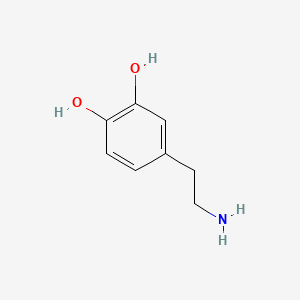
You know so much about the structure on the left, I don’t even have to explain it to you. No, I’m serious. That’s dopamine. Dopamine is the neurotransmitter which is released when we perform an action(s) that feel pleasurable. By extension, many of the addictive substances in the world today facilitate the release of dopamine, because everyone wants to feel “good” and “happy.” However, be warned, chasing an instant dopamine rush is quite dangerous because it leaves us in somewhat of a state of complacency and is achieved through toxic substances
Want Brain Games for Discount?? Keep your mind stimulated for life!
Transmitting The Basics
Where Are You Now
In your head, you may be imagining a neurotransmitter like a cheerleader, telling the signal to keep going down the nerve. Well, it acts more like a push of a swing, rather than a cheerleader. To understand how, we really need to understand the extremely miniscule neuronal gap, between axon and dendrite(Check out Scholarly Sunday 1!!). Between two neurons, yes between, two neurons, there is a gap. It is not a continuous entity like you may have imagined. Formally, it’s known as the synapse. In this junction, the neurotransmitters are stored right on the edge of the axon, extremely close to the end of the entire neuron. Assuming the incoming electrical signal has gone through the soma(cell body) and was overall summed to be strong enough to travel down the whole axon, the electrical signal triggers a Calcium barrage into the neuron. This facilitates the binding of vesicles, where neurotransmitters are stored in packages, to the cell membrane; the neurotransmitters are expelled out of their vesicles, and bind to receptors on the dendrite of the neuron which receives the signal. The bonding subsequently facilitates a response in the receiving cell, and the signal goes on and on(or, if the neurotransmitter tells it to, turns quickly off)
AP Neurotransmitter History
Neurotransmitters are actually quite a recent discovery, in terms of science, with the first ones being discovered in the 19th-20th century. German scientist Otto Loewi took some substance from nerves near a frog heart, transported onto another heart, and watched as the heart literally slowed its beating rate. This proved that there was some form of chemical change ongoing in the process, which sparked extreme research into neurotransmitters. Through several groundbreaking experiments, various different neurotransmitters were found and their roles are still being explored. Another major question however, was how are they released. Scientist Barnard Katz studied the neuromuscular junction, the place where nerve attaches to muscle, and stimulated signals which in turn stimulated muscles. He observed continuous peaks in electrical charge, which were proved to not be error as there would be no peaks in the presynaptic area, which is a fancy term for the area which is sending the signal. Additionally, in times of no stimulation, there were still mini blips which had identical peaks. The blips are caused by random release, which is a whole matter on probability, but that’s not our focus. The fact that the blips were identical in size insinuated a proportional method of NT release, which sparked the theory of the vesicle

Bernard Katz was a great scientist whose amazingly simple experiments proved seemingly complex ideas. Through simple electrical stimulation and recording, Katz was able to prove and verify the existence of some chemical substance which controlled signal propagation
You Are The Thinker
Neurotransmitters keep signals going between neurons, check. But, even more impressive, how does the brain operate in such a way that certain actions or instances trigger the release of specific rather than random neurotransmitters. Well, it all starts with how we process the external stimuli. That, of course, is done through a complex series of neural networks, which, in turn, leads to high activation of the frontal lobe, responsible for critical thinking and processing. As we grow, the brain learns to process different things based on the consequences of the action. For example, through experience, the brain has learned that working out and exercising gives you big muscles and a lean physique, which is obviously positively viewed and leads to a beneficial lifestyle. Scientists believe that this is an evolutionary requirement. There is no specific reason as to why a certain neurotransmitter corresponds to a certain set of actions, like dopamine to reward. The important thing is that they exist. When we perform a set of actions, and “feel good” neurotransmitters are emitted, that prompts us to do the action again. Now, of course, man-made substances like drugs and alcohol can throw the system out of whack and it’s important to distinguish what is energetically efficient from inefficient, but for the most part, all of the neurotransmitters, all of the communication between the vesicles and us, all of their functions, are evolutionary and necessary, not only for signal transmission but also for communicating to us of the consequences of our actions.
Symphony Of Signals
Red Light, Green Light
There are many types of different neurotransmitters, each with a set of different functions. However, not all of them keep the signal going through the neural network. Some have inhibitory effects, and some have excitatory effects. The main mechanism of action is a different type of polarization. Polarization is a change in the electrical properties of something; a neuron has a negative electrical potential, meaning the outside has a higher net positive charge. When an excitatory neurotransmitter binds to its receptors and triggers the postsynaptic response, it opens up positive ion channels and counterbalances the negative charge; it is the positive charge which keeps the electrical signal going; the firing of an electrical signal is an action potential. When an inhibitory neurotransmitter binds to its receptors, negative ion channels open, causing a net flow of negative charge and further polarizing the already negative membrane, resulting in no action potential. Through a phenomenon called synaptic summation(along with many other factors), if the excitatory inputs outweigh the inhibitory inputs, it makes the firing of an action potential that much more likely. Inhibitory signals are vital to maintaining balance in the nervous system, ensuring that action potentials aren’t simply continuously fired, as that could lead to an extreme mess.
Target Acquired
Let’s look at some of the more mentioned neurotransmitters that we frequently hear about in conversation, studies, or in general. One such, is acetylcholine. Acetylcholine is primarily involved in muscular processes. When it is perceived by the brain that our bodies want to voluntarily contract a muscle in order to move some sort of external stress, acetylcholine is the primary neurotransmitter in propagating the signal from neuron to neuron to neuron to muscle cell. In this case, it would act excitatory. However, in processes like heart rate regulation and secretion regulation of certain glands, acetylcholine acts inhibitory. Another one is serotonin- a neurotransmitter which is commonly mentioned in depression. Serotonin is primarily an inhibitory neurotransmitter, and adequate levels of serotonin prevent emotional outbursts or excessive emotional influence. Working out is associated with increased levels of serotonin, and depression is conversely related with decreased serotonin levels. One other common Neurotransmitter that we will talk about(no, NOT dopamine) is GABA. GABA, like serotonin, acts in the Central Nervous System, and is considered the primary inhibitor. It controls things from sleep regulation, to motor regulation. These neurotransmitters are evidently vital(and are the reason) for signaling between the neuronal circuits. However, it’s the receptors which mediate the flow of the signals
Tropic-al
There are two types of receptors for neurotransmitters: ionotropic and metabotropic receptors, each which propagate the signals in very different manners. Ionotropic receptors are primarily utilized for fast signaling, such as when sensory perception is required. Ionotropic receptors simply cause ion channels to open and allow for the flow of certain ions inside of the cell. Metabotropic receptors are primarily involved in regulation. Metabotropic receptors bind their neurotransmitter and initiate a signal transduction pathway which can lead to signal amplification, resulting in a longer, more prominent signal. Metabotropic receptors are also involved in complex cognitive processes.
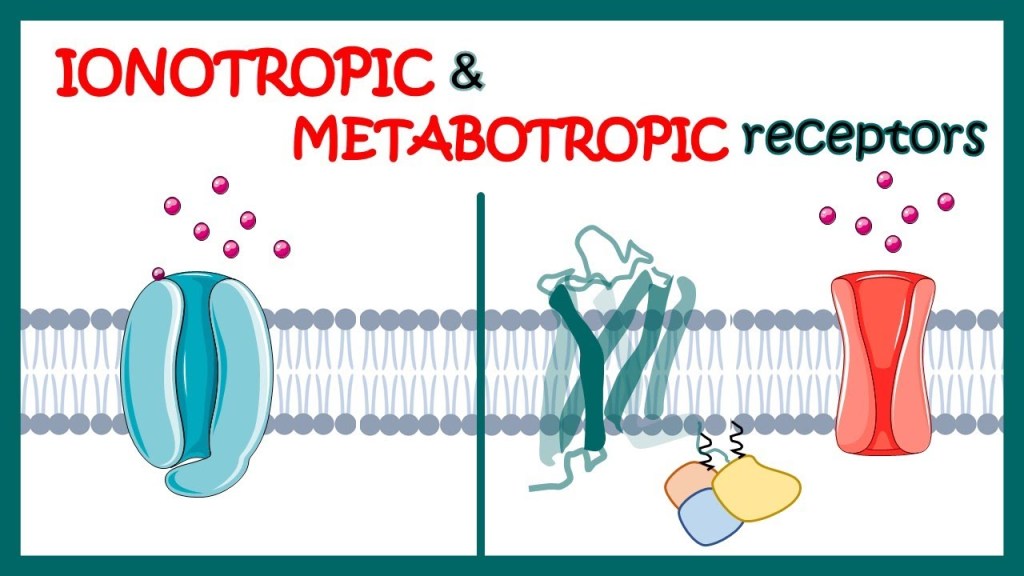
Ionotropic and metabotropic receptors both serve important functions in the same branch, neuronal signaling, in different formats. Ionotropic receptors are primarily used for quick, rapid signaling, whereas metabotropic receptors are for longer lasting signals.
What’s Nextotransmitter
Development For The Future
Neurotransmitters are at the foundation of most developmental research. For example, many drugs block the effect of certain receptors. For example, anesthesia blocks NMDA receptors, as NMDA is one of, if not the primary, excitatory neurotransmitters in the Central Nervous System. By discovering more neurotransmitters and discovering their functions, scientists can block and enhance certain receptors, which can boost mental health treatment, numbing agents, and can potentially even allow for abstract ideas like mind manipulation, perhaps controlling which neurotransmitter receptors are blocked and enhanced at which time. Many developmental, advanced ideas exist right under our noses…or, above them I guess.
Wrapping It Up

On this journey, we explored perhaps the most important component of the nervous system. Neurotransmitters are responsible for signal propagation, process regulation, and emotional awareness. Such a specified class of molecular structures can literally control our movements and feelings, all from the release of a vesicle. After all, it’s the little things that matter!



 NeuralAYM
Leave a comment