Autism, perhaps misconceptionally, has an extremely negative stigma around its name. Yes, it is considered a disorder due to the methods in which it can impair one’s social and developmental skills. However, we are quick to label it a hindrance and underestimate diagnosed individuals, when they can actually accomplish more than one with a typically functioning brain. Over the years, several individuals who were exceptionally amazing in their specialty also were diagnosed or thought to have some form of autism, be that on a minor or major scale. While autism itself does not actually make you smarter, there has been fair amounts of talk that having autism can lead to greater skill capabilities in an activity/field of choice. The suggestions have sprouted in society extremely recently, with ex World Chess Champion Magnus Carlsen being the most recent to be labeled by fans as potentially possessing the disease. Although, as aforementioned, autism is not directly related to an increase in intelligence, these postulates could not have fostered from nowhere. There must be some sort of evidence, some mechanism, some secret which we do not know just yet. Let’s examine the interesting disorder and take a look at some amazing individuals who happen to have it
Autism is actually more common than one would think. It occurs at high rates, with about 1 in 36 children being diagnosed with autism. The number has risen from 2020, which reported 1 in 54 children. It doesn’t necessarily make sense that the disorder spiked in popularity, so our testing methods most likely have improved
Want Brain Games for Discount?? Keep your mind stimulated for life!
Elementary Proceedings
Evaluate The Spectrum
Autism primarily is associated with affecting the emotional development, recognition, and skills of the affected individuals. You may have heard of autism being referred to as a “spectrum disorder,” and that is because of the wide range of symptoms which are associated with it. People with autism suffer from impairment of the amygdala, a region of the brain associated with emotional processing and control, hence why children with autism may be seen “outbursting” frequently. The prefrontal cortex, associated with impulse control, is also affected. Along with impulse control, planning is also affected, which contributes to the often “repetitive” behavior that individuals with autism have. The severity at which autism affects one’s development/behavior is variable, based on factors that we will get into later in the article. Milder symptoms obviously render individuals increasingly functional, whereas extreme symptoms can affect someone to a point of devastating dysfunctionality. Although autism is not a neurodegenerative disorder like some neural conditions are, meaning it does not spread to other parts of the brain other than the affected areas, it does undoubtedly affect daily life. However, we discussed in the opening statement of how autism could be thought to actually enhance certain aspects of their lives and boost learning capabilities to the extent that they are more capable than the unaffected population. The idea of a spectrum supports this. An individual suffering from minor symptoms of autism which has not greatly affected them throughout their life could exhibit less interest in the emotional and social aspects of the world(their external environment) due to the natural impairment caused by the condition, and yet be focused on their interest or task with heavy attention; because their symptoms are minor, the effects may only be applied to their external environment and not to their priorities, enhancing their attention and intelligence in terms of that task. However, the question remains, how does impairment of one area, albeit slight, lead to enhancement in another area? Additionally, is it possible that people with intense cases can “learn” through reinforcement how to control their impulses?
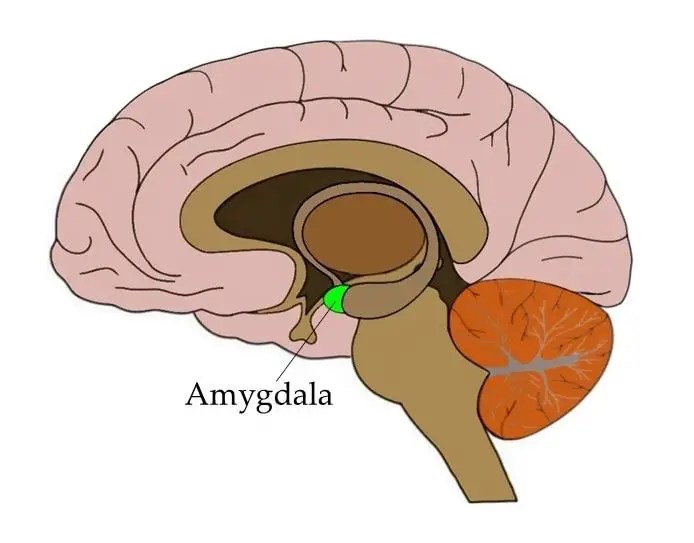
Yes, this tiny sub structure is responsible for a large portion of our emotional control. Unfortunately, in someone with autism, this structure is damaged, leading to an impairment in social and emotional intelligence. Other areas within the frontal and temporal lobes are also damaged
History
While one may presumptuously expect that autism has ancient roots, with olden philosophers reporting unusual or arbitrary behavior from some sort of test sample and then linking it to autism, they would sadly fall incorrect. Surprisingly, I must admit, the discovery of autism has extremely recent roots. While the early discoveries of autism did go something like the scenario I just described, it did not, in fact, happen in the times of ancient philosophers. In the Late 19th Century, there were recordings of people displaying certain noteworthy behaviors, behaviors which are now linked to, of course, autism. Notable neural investigators made these observations in the Late 19th and Early 20th century. These investigators had been involved in Down Syndrome, Schizophrenia, and other disorder research, so they knew a thing or two about behavioral anomalies. The catapult in understanding largely stemmed from two men: Leo Kanner and Hans Asperger. Kanner sampled a group of 11 children with these same “noteworthy behaviors,” described as “social and communication difficulties.” In a playground experiment, where the children were specifically set up to interact with each other, these children would repeat their behaviors and actually prefer to remain isolated(GPT, 2021). Hans Asperger also worked with children who exhibited autism-like symptoms, but he actually found that these children oftentimes displayed intense focus and expertise in areas that they were actually interested in. This phenomenon, now known as Asperger’s Syndrome, is what we are attempting to explain within this article. After Asperger’s and Kanner’s work, autism understanding began to rapidly evolve. In the 1980s, the disorder began to be classified on a spectrum, when scientists began to realize that not everyone with autism displayed the same difficulties, nor did they suffer at the same intensity. In the DSM-III, autism was included as a diagnostic category, and the 4th and 5th editions of the DSM recognized its existence as a spectrum. Since then, research has been done to diagnose the disease earlier and to support people who have autism.
Treatment
There is no set “treatment” which can assist someone in completely curing autism, as it is a condition which one is born with and which alters their brain chemistry permanently. There will never be a pill or injection which can alter brain chemistry, let alone permanently. However, there are intervention methods which can milden the symptoms, and perhaps even reduce them to something akin to Asperger’s Syndrome. Like many behavioral therapies, the interventions utilized would be highly tailored and specified to meet the individual’s needs. One of the most effective measures is ABA, Applied Behavior Analysis. The patient/therapist will systematically analyze behavior- certain stimuli which may facilitate a behavior, performing the behavior itself, and evaluating the consequences of that behavior. Although someone with autism may lack sufficient emotional and social intelligence, they are still aware of what is considered “good versus bad,” or, perhaps, utilizing a better phrase, “beneficial versus harmful.” By realizing that poor impulse control can lead to increasingly disastrous consequences both for the performer and for the recipients of the behavior, the neural connections associated with memory may transmit signals which incentivize the individual to attempt controlling their impulses. To enhance its effectiveness, ABA therapists may give some sort of reward to the patient when they demonstrate solid control and behavior. General speech therapy is also recommended for people with autism; not just talking speech therapy, but nonverbal speech therapy as well, so they can further understand body language, social cues, etc. The therapy improves social skills as well as communication skills. Motor therapy is also involved, but this is no different than general therapy which is specified to handle difficulties with people in autism. The main source of relief for autism is behavioral therapy, which teaches impulse control, increased awareness, increased speed in recognizing consequences, and overall improvement.

Applied Behavioral Analysis is quite an effective method used to improve impulse control in people with autism. By reinforcing positive behavior with reward and assisting them in assessing potential consequences, their daily life subsequently improves
Genius
Too Good To Be True?
Now comes the moment you have all been waiting for- is autism, in its mild or alleviated form(with therapy) actually capable of increasing the focus, intelligence, learning, and performance capabilities of someone IF they are actually interested in a certain subject. We have already seen some sort of form of this with Asperger’s Syndrome, but how common is it? Let’s examine the science. We know that people with autism lack to some extent, emotional and social intelligence. By extension, we can probably infer that they do not particularly care, or even have the inclination to care about it. Additionally, their struggles with social communication may drive them further and further away from it. Hence, scientists have said that when someone with autism does develop an interest, it goes beyond a mere interest, it is a hyper-passion. Additionally, the tendency of someone with autism to repeat their behaviors can be a blessing when it comes to their interest. They would never get tired of constant practice. These factors, along with remarkable pattern recognition, logical thinking abilities, and visual-spatial reasoning, can contribute to increased learning capabilities in certain fields. But, these are merely the factors and logical reasoning which underlie the phenomenon…that’s not what NeuralAYM is about. We corroborate psychological analysis with scientific evidence. Although the underlying mechanisms behind the phenomenon is not heavily understood, there are some reasonable explanations. Studies have suggested that “atypical connections” could be present in the brains of someone with autism, resulting in underconnectivity in some regions but remarkable overconnectivity in others. The overconnectivity can cause neural regions to become hyperactive, leading to easier achievement of expertise. Additionally, another theory states that they may have sensory preferences which causes them to become more sensitive to stimuli in certain areas/fields, resulting in increased pattern recognition and, by extension, increased learning capabilities. Regardless of which one is true, we must appreciate their amazing capabilities. So, although all humans are born with the same inherent “maximum capabilities,” the altered brain chemistry of someone with autism may enhance their ability to tap into deep focus

This is a familiar face- Magnus Carlsen, the GOAT of Chess. Did you know Carlsen was diagnosed with Asperger’s Syndrome? That could explain his capabilities beyond comprehension when it comes to the Chess Board. Now, beware, I will reiterate that I did not say people with the syndrome are innately more capable, but they could have an easier time learning and picking up certain details
Research
Research is being done on several aspects of autism, including the enhanced learning capabilities, the phenomenon we have been talking about. However, due to its variability, and the fact that the variability is quite literally present from birth(denoting the need of a spectrum), quite a bit still remains unknown. First and foremost, early detection is a priority. While autism is obviously present at birth, it is quite literally impossible to diagnose it the moment a child is born. However, it is known that the younger the age, the more impressionable one is due to the brain structure being in early developmental stages. Hence, with improved identification methods taught to both doctors and parents alike, behavioral therapies to control any potential issues will work to greater extents. Neurobiology, like we have consistently discussed in this post, is being heavily researched. It was aforementioned that although we have somewhat of a decent understanding of what is affected in autism and how altered brain chemistry may lead to altered neural activity, the details are still hazy…and biology is all about details. Using imaging techniques(Trailblazing Thursday!!), behavioral analysis, and several other methods, scientists are zeroing in on the intricacies of neural function. Genetics are also a big question for researchers. Scientists are attempting to localize genes which facilitate the presence of autism and increase its intensity. Potential mutations to this gene can severely alleviate a poor soul whose condition may be quite intense. However, there are major ethical considerations when it comes to gene editing, as it is essentially like “upgrading” a human. In disease cases, gene editing is definitely a valid treatment, but in psychological disorders, it may be unnecessary and unethical. In short, the research being done on autism focuses on its early recognition to better acclimate children to improve emotional intelligence, and on the neural workings of someone who has the disorder.
Wrapping It Up
Autism, unfortunately, has gained somewhat of a naturally negative connotation due to its classification as a disorder. Yes, there are some neural impairments and yes, treatment may be required- but a naturally negative or sympathetic response to someone who has it is an injustice to them. Do not overlook what they, or for that matter, anyone can do. Greatness lies in everyone. But it must be cultivated

 NeuralAYM
Leave a comment