On the site, we have covered some absurd phenomenons, from dual-sensing, to projecting thought onto a computer. However, one thing we have not talked about(which actually surprised me) to date is hallucinations, or at least the concept of them. Hallucinations are really something straight out of a horror movie- you see something that isn’t there, hear something that isn’t there, perceive something to be another thing…not only mysterious, but they’re frightening. One morning, you’re peacefully lying in your bed, watching the sunrise as you have no intention of hoisting yourself from under the covers; your mother comes to awaken you for a long day of school ahead. Alas! It isn’t Mother, but rather a stranger…but it looks just like your mother…but it can’t be…what?? Such is the nature of Capgras Delusion. Someone who has been unfortunate enough to experience it literally is overcome with the belief that someone close in their life has been replaced by a stranger. Logically thinking, unless there was some “Great Reset” that spontaneously occurred in the mind, this makes absolutely no sense. Hence, why it is mysterious. Is Capgras a condition? A temporary, extreme brain fog? Genetic? Induced? What is it, why does it exist…and how does it come about? That’s the question befalling all of us, isn’t it? Does this article even exist?? Or is it an impostor? Were you supposed to be reading a Shakespeare and your mind wandered off and now is educating you on Capgras Delusion?

To be honest, Capgras seems extremely puzzling off the bat. It does not make sense how our memories can just, poof. Exactly, it doesn’t make sense. Something must have happened, some sort of malfunction with the nerve fibers of the brain, that caused an instantaneous memory wipe. Before we investigate, think to yourselves…based on knowledge we have from previous articles, what could have happened? It’s a mystery
Want Brain Games for Discount?? Keep your mind stimulated for life!
No Illusion, Just Facts
I Swear, I’m Not Delusional
Before we even attempt to educate ourselves on the mysterious neural pathways and signal transmission issues that would have to occur for one to have an episode with this type of delusion, let’s first gather a concrete foundation on what it actually entails. Prior to anything, it’s crucial to establish how this even happens. Capgras, fundamentally, is a disorder-specifically a psychiatric one. It is, albeit rarely, associated as a byproduct of neurodegenerative conditions such as dementia(and probably Alzheimer’s), and can even occur in individuals who have mental health disorders such as bipolar disorder. Additionally, as you may have imagined would be a valid answer to the earlier question I posed, injury to the brain can also cause Capgras. Now, it is extremely unlikely and doubtful to have ever been recorded that a person has a temporary episode of Capgras and nothing alongside it. An incident where one exhibits symptoms of Capgras Delusion quite definitively implies that they have an underlying condition. So, we now have a solid understanding of its onset. It is random, unpredictable, and probably attributed to a larger issue at hand. And although we received a brief description of it in the opening section, what exactly is Capgras Delusion? It is exactly what it sounds like- a delusion. It is literally a firm belief that an individual who is sentimentally close to you has been replaced by an imposter. Yes, a patient can identify the individual and everything about them with no issue, but they have trouble attaching the sentimental value they hold to them. The person may have a different “feel” to them, an eerie vibe per se, rather than one of love and laughter that the patient is used to recognizing(GPT, 2021). The intriguing part is that in the event of an episode, they make minimal attempts to try and recollect their past experiences. They are actually firmly set on their belief that this person is not a person they hold emotional resonance with. And the worst part about it is that their brain still activates the stress response(Scholarly Sunday!!!). This activation coupled with an already poorly functioning brain results in anxiety or irrational distress whenever they see the “impostor,” as they are convinced that the person they know is gone

Oftentimes in articles, especially ones about disorders or injury, you consistently are told that brain and head issues, while they may seem minor as they go visually unseen, are perhaps the most frightening. Capgras Delusion, although it seems extreme(and it is), is merely a BYPRODUCT of a likely larger underlying brain issue which has yet to be addressed
Discovery Of Delusion
It’s actually quite awesome(not the delusion, the science) that Capgras has gained its own distinct title. You may be inclined to think that such a byproduct of neural issues may just go down as nothing more than just that, a byproduct. As we know, obviously, such is not the case. How did Capgras get its own name and such attention? It is an outlandish issue, yes, but there are many others symptoms of neural disorders which do not get a title. What happened with Capgras? Capgras delusion has an extremely recent history, unlike other phenomena we observe that have ancient roots. While there were observations of patients being recorded as exhibiting similar behaviors to that of Capgras Delusion, the formal description was first written in 1923 by psychiatrists Joseph Capgras and Jean Reboul-Lachaux(GPT, 2021). The both of them investigated upon a woman who seemed genuinely convinced that her husband was some sort of actor or a double. Because it was a specific phenomenon and not just an expected side effect of neural complications, it actually received its own attention. However, its distinction became beknownst at later periods in time. Originally thought of as a natural symptom of a mental health disorder such as schizophrenia, it was later discovered that Capgras could occur on its own(which is where injury comes into play, we will focus upon this), hence confirming its distinction as a separate entity. Psychiatrists attempted to uncover psychological roots behind the formation of Capgras Delusion, utilizing the psychodynamic perspective(Sigmund Freud’s theory) and stating that the delusions were due to unresolved conflicts in the mind; that theory did not gain much attention, as more scientific mechanisms were introduced to psychology. And, as we began to study the scientific functions of the brain, we began to recognize the precise mechanisms responsible for Capgras Syndrome…and that’s exactly what we are about to do too.
The Reality In Delusion
A simple *disclaimer* before we get into what exactly composes Capgras Syndrome- the exact mechanisms behind it are not fully understood. But when is any mechanism in the brain fully understood. Only the brain understands the brain. When has “incomplete understanding” ever prevented curious NeuralAYM readers from pairing common sense with basic scientific principles!! Now, it is important to remember that the brain operates on a complex network of neural connections. This may seem obvious, but we need to hammer this into our brains for this topic; literally EVERY major functionality in the brain is connected. With that little tidbit, let’s dive into it! We will split this up into two parts: the scientific mechanisms, and the psychological byproduct. So, scientifically, there are some prominent theories, but one commonality exists- the connection between two areas: the FFA(Fusiform Face Area) and the amygdala. The Fusiform Face Area is responsible for facial recognition, and the amygdala serves high functionality for emotion regulation. If you pause and think, how do you identify and associate a name, a shape, memories, emotion, sheer recognition to someone? Their face. Without a face, what sort of basis would we have to recognize them. Their name, sure, but names can be fake. Three main theories- Disconnection, Impairment, and Dual-Processing exist- to explain the phenomenon. Proponents of either either believe there is complete disconnection of the FFA-amygdala connection, some sort of impairment between them, or, in the dual-processing case, the face recognition pathway stays intact but the “affection” pathway does not(I’m not so sure about that one). Either ways, it seems to be clear that there is indeed a pathway between the areas responsible for facial recognition(which makes sense; facial recognition is a larger part of the brain than one may presume) and the areas responsible for emotional regulation(primarily the amygdala). In psychological terms, where Capgras is more of a side effect than its own distinct syndrome, the same primary principles apply. Poor emotional regulation caused either by disruption to certain structures(injury) or impairment of the pathways.
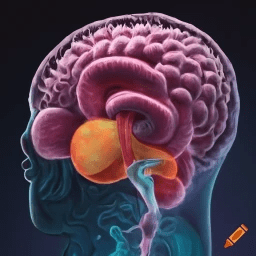
The amygdala is a relatively small structure with a not so small function. It is responsible for a hefty amount of emotional processing, and whenever there is some sort of emotional discrepancy or disconnect present in a condition, the amygdala is immediately analyzed as a problem area. Such is the case in Capgras as well
But I Really Loved Them
Treatment Options
To say the least, Capgras is bizarre. Although, after looking at the proposed scientific mechanisms behind it, hopefully it makes some sense. That being said, with a condition so detrimental to one’s life, is there any sort of treatment to correct it? Let’s see. The first, and probably most obvious therapy, is CBT- Cognitive Behavioral Therapy. The ideal aspect of Behavioral Therapies is that because it appeals to and utilizes the general mechanisms of the brain, it can be used for a wide variety of psychotic issues. The individual is, in a way, forced to recognize and challenge their issues. For example, in an individual with PTSD, they are asked to recollect the traumatic incident and then therapy is provided which conditions them to learn that not all experiences which may be somewhat related to the trauma will actually cause some sort of trauma. Similarly, the patient will be told that their perceptions of the person are wrong. If the theory of impaired connections is true(which it probably is), then behavioral therapy is likely the best option. Recall that neural pathways are strengthened via practice. While we have not reviewed the exact electrical mechanisms behind this phenomenon, the saying “practice makes perfect” is indeed largely accurate. By repeating tasks, the neural pathway associated with that task is strengthened. Additionally, neurofeedback may be utilized amongst the behavioral therapy. Neurofeedback is a mechanism by which a software will provide a patient with instant positive reinforcement if they completed an allotted task in a correct manner. If a patient with Capgras is able to, for example, look at some pictures and associate emotional value with a face they previously did not recognize as having emotional value, the feedback system may play a relaxing song or a few seconds of a movie clip…anything to assist the patient in understanding that a certain action is beneficiary. Because it is a psychological disorder, there are no real medications which can be given unless it is diagnosed as part of an underlying psychological condition where medication is common, such as schizophrenia. Otherwise, although potentially tedious and time-consuming, behavioral therapy is probably the best option.

This is literally what a behavioral therapy session might look like. Perhaps there is more technology involved, but for the most part, a therapist provides a patient with stimuli to improve their behavior and via reinforcement and practice, the behavior is hopefully corrected
Future Research
Considering how truly inexperienced we are in the matter of the causations and mechanisms behind Capgras(and various other arbitrary psychologically induced disorders), there is quite a bit of research ongoing to better understand it. An avid NeuralAYM reader may presumptively know the first one- Neuroimaging. We have quite possibly mentioned neuroimaging in the past ten straight articles, but that goes to show just how powerful it is. Via fMRIs and other tools, scientists can compare the neural activity of someone with Capgras Delusion versus someone with no history of it. Recording the electrical activity of a pathway involving the FFA and the amygdala between two people, one experimental and one control, can highlight precise differences between the two pathways. Additionally, regular MRIs are utilized to potentially highlight anatomically related differences in individuals with Capgras. They are used to localize potential lesions, examine deficiencies in the amygdala, and any sort of potential indicator of such a psychological abnormality. Examinations were also provided to individuals with Capgras. This isn’t necessarily research done to alleviate or treat the condition, but investigations can be conducted on any critical thinking or cognitive deficiencies by providing these assessments to individuals with Capgras. And, of course, as in all scientific studies, the potential of genetic factors are being studied as well. Although, it is generally unclear how genetics would contribute to Capgras, a factor such as neurotransmitter imbalance could play a role. One thing is certain, however. We have a lot to learn!
Wrapping It Up
Capgras Delusion. If you were unsure what to expect when entering the depths of this article, you are probably a lot more unsure now. Although it is quite rare and often accompanied with an underlying disorder, the sheer existence of it sheds light on the efforts we must take to preserve our neural health. It may seem mysterious(and it is), but all of a sudden you see it in real time, and it’s frightening. Take care and stay curious!


 NeuralAYM
Leave a comment