Try reciting THAT title ten times fast. It’s a mouthful, isn’t it? It’s probably almost as difficult as inventing such an amazing tool. Normally, the titles of our articles seemingly entail what is to come in the article itself; but this title is just, admittedly, downright confusing. You may recognize the word “electro,” and “ography,” which denotes we are studying something. But other than that, we are left clueless…but that’s why you have NeuralAYM! When people look into the history of EEG, they are often rendered slightly surprised, because it is just over a century old. We presume that something with roots in the 20th century can’t reach this new threshold of advancement that we are accustomed to with scientific discovery today. However, EEG favors its odds. Arguably the most important and groundbreaking neurological invention of all time(in terms of experimental neuroscience), it has allowed for advancements in fields such as precise neural mapping, functionality discerning within the brain, stimulation of specifically targeted areas, and many other functions which we will dive into. The story and the future chapters of EEG warrant a dedicated post, so prepare yourself to examine the extensive, ultra-complex world of…ELECTRICITY!!

Electricity? Complex? But I know everything about it already! Yes, while the basic properties of electricity aren’t necessarily too tough to wrap our heads around, its applications are more marvelous than we could assume. Major credit is required for the physicists and scientists who have achieved mastery of electricity
Want Brain Games for Discount?? Keep your mind stimulated for life!
Ignition Of A Spark
Conducting Our Understanding
Electroencephalography, or EEG as it is most commonly referred to, entails a class of methods utilized to monitor the electrical activity of the brain, stimulated via natural behavior or some sort of intentional environmental manipulation. One of the primary reasons why it is so sought after is due to its non-invasive nature. The brain is highly protected due to its sensitivity, as evidenced by our resilient Blood-Brain-Barrier. Electrical recordings taken from directly within the brain run a huge risk of infection, but EEGs can be performed from outside of the brain and from the scalp. The basic idea and applicability of EEGs are relatively simple; it is the development and mechanisms behind it, which we will speculate later, and its wide range of applications which make it so fascinating. Before we analyze its scientific parts, it’s prudent to understand in what ways can we utilize it. Generally in EEG, an electrode is placed upon the scalp of the individual in question. This practice is used for all types of scenarios, ranging from diagnosing sleep patterns to intentional stimulation of the brain. Ambulatory EEGs are when patients carry an electrode around for a period close to 24 hours(or however long is suggested by the experimenters), and is most applicable when a patient is reporting infrequent yet severe occurrences(GPT, 2021). Video cameras can also be used in tandem with EEG monitors to determine if an unusual occurrence or pattern is directly associated with a severe electrical displacement, and in what area does that displacement occur. A particularly interesting area of EEG usage is functional EEGs, which actually allow scientists to study connectivity between regional areas of the brain. Because this may seem slightly confusing, let’s briefly bolster our understanding of an fEEG. An fEEG is interesting because it is likely the most useful out of all the EEG methods in terms of understanding intrinsic workings. Generally, scientists will task a patient with some sort of critical thinking activity; don’t think extensively hard…it can be as simple as decision making. Scientists will place electrodes over areas they suspect will fire in that specific scenario and record the electrical activity. If there are spikes in both areas, but let’s presume one comes after the other, we can assume that there is some sort of communication going on. I know that’s a lot to digest, but the main takeaway is that EEG is a simple mechanism which has a lot of capabilities
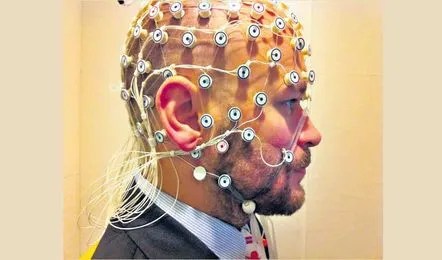
Although this is somewhat abundant, this is actually an accurate depiction of what a patient undergoing EEG Testing would appear as. The electrodes are collecting neural data
Lightning Strikes
Wait, something seems off here; an avid NeuralAYM reader may have observed the discrepancy with no hesitation: “Where’s the history section?” Yes, while the History section normally falls immediately after the Overview section, we must respect the complexity of the EEG mechanism and examine, how does it all come to fruit? Unlike other posts where we examine neural workings, today we will examine engineering as well as neural workings!! EEG all begins with an electrode, a device made up of a conductive material, which should come as no surprise, as these devices have to read signals. They can only do so if they can process the signals to a full extent. The electrode will be placed onto the skin, or in our case, the scalp. And then, like a passenger at a bus stop, they wait…until they detect a signal!! The only caveat is, these signals are extremely small. If a jolt of electricity we are used to seeing in reality were to be present in one conduction in our bodies, it could cause an extreme seizure, and most likely dysfunctionality and/or death. From a human perspective though, that’s tough to measure. Hence, we gave electrodes devices called amplifiers. Amplifiers contain a machine known as transistors, whose properties are quite complex to explain on a neurological-based site, but the key component of a transistor is that it uses charged components within it to amplify incoming currents. Via amplification, the magnitude of the electrical signal coursing through the body is registered. The signals, which begin as analog representations(think telling time with the two hands on a clock) are converted to a digital(think telling time just by reading numbers) representation via a device called, shockingly, a converter. The converter has a resolution which is specified in bits, and those bits in turn represent the quantization levels of the converter. The converter will compare the signal it is receiving to a quantization level and then assign to it a corresponding digital value(GPT, 2021), for the world to see on a computer.
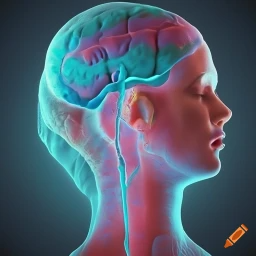
Whoa, how did scientists even think of inventing such brilliant devices? Well, think fundamentally. The goal was to understand the brain; to most effectively understand someone, we must discern how they communicate. The brain communicates via electrical signaling, so recording electrical activity would, by extension, be the most efficacious method(and likely the only method) to gain an inside view into our minds. But which great scientists had this epiphany??
Electric Backstories
EEGs are too modern even for ancient science’s own good! While most neurological findings, therapies, etc. have roots in the days of ancient philosophers, not EEGs. At the turn of the 19th Century, European scientists such as Richard Caton and Adolf Beck did record electrical activity in the brains of animals, but at the time, no one knew how significant this would prove to be(GPT, 2021). We were largely unaware that this was the language of the brain. However, with EEG, we became aware. The reason why EEG is so heavily talked about and appreciated isn’t just due to the fact that it gives us a mechanism for how to read the brain, but it taught us that electricity is THE WAY to read the brain. Before EEGs, we didn’t have a surefire way to investigate deep mechanisms of the brain simply because we had no idea where to even start. When Sir Hans Berger placed an electrode on the scalp of his son and actually got a reading, it marked the birth of a revolutionary tool. The most interesting discovery proceeding the development of the machine came in the form of waves; scientists discovered that there were different types of waves associated with different frequencies, often stemming from the type of activity that a subject was performing(GPT, 2021). For example, delta waves were associated with low frequencies, and often stemmed when a patient was in deep sleep. In contrast, gamma waves, with frequencies ranging up to 100 Hertz, are associated with critical thinking. Since the 1940s, when scientists began to utilize EEG for medicinal and experimental purposes, studying conditions like seizures, epilepsy, and observing how patients respond to certain stimuli, the work done has mostly been tailored to increasing the accuracy and clarity of EEG recordings and discovering different applications, which we will discuss in the later parts of the article
Let It Flow
Intense Reading
So, we now have at least a *basic* understanding of how electrodes and EEGs function to bolster our understanding of the entity that is the brain. However, collecting results is the easy part; interpretation is what matters. How do scientists read what’s going on? Sure, there are converters, but what does analog to digital conversion represent in reality. Seems like a job for us to discern! Before reading any abnormalities in an EEG measurement, a baseline must be established; this will normally be the resting potential of the neuron, -55 mV, with some mini-spikes due to random firings, but a generally flat line. Also, we had talked about how the electrode amplifies the signal when it processes it, but on a graph, the main reading is still Milli or Microvolts with respect to Time. With the brain, it is likely Millivolts. Resuming the discussion of analysis, let’s touch a bit more upon those mini-spikes I mentioned. Think of the random, yet extremely frequent actions we perform which does not require our attention, but still requires basic function. Blinking, tiny movements, any essential function can cause a mini spike. Scientists must differ between this based on frequency of the spike and the specific voltage. Once they have identified the baseline, they will then examine the Hertz of the readings; spikes occurring extremely frequency indicate a state of high alertness, as we discussed in earlier sections in the article. Such examination indicates to the scientist what they may expect from the patient in question- whether they are relaxed or alert. Once they have established their basic findings, the fun begins. Any abnormal spikes between hemispheres, rapid spikes in the face of a certain stimuli, any sign of random neural firing(epilepsy) is taken into account, reported, and analyzed.
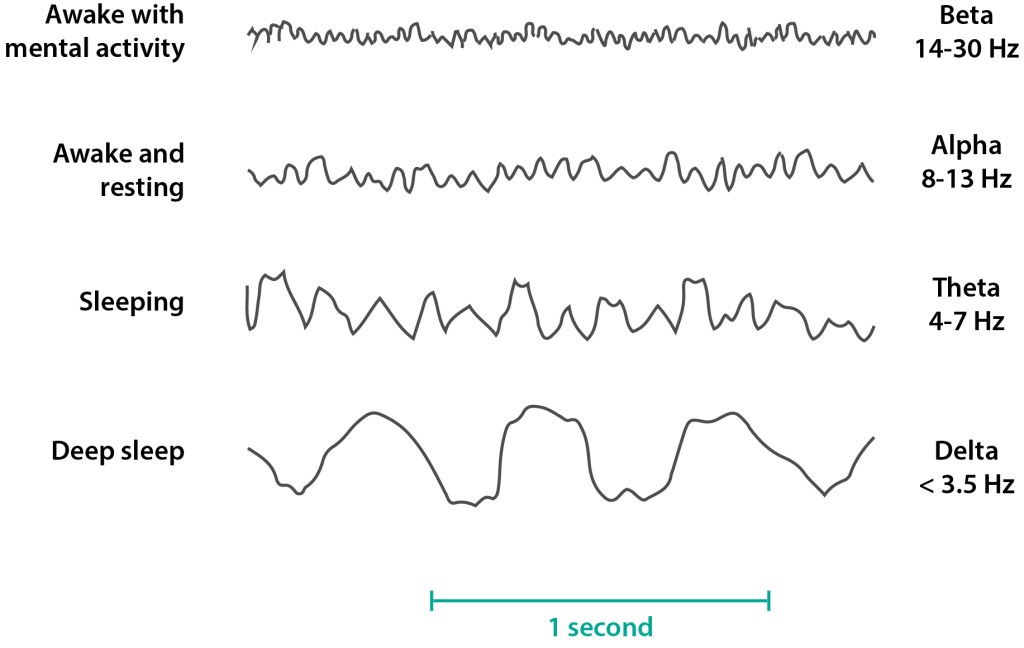
This is quite a detailed representation of an EEG reference frame. Displayed are the general wave patterns for individuals in different cognitive states, which scientists use to observe the patient’s alertness
Future Research/Implications
As aforementioned, because we have the fundamental principles of electrical neural reading down, the next steps are largely focused on improvement. One area that has been brought up incrementally throughout the article is the idea of more accurate representation. This would be achieved through “High-Density EEGs.” Scientists are attempting to discern more areas for which we could place electrodes, which would in turn provide us with increased sampling. Brain-Computer Interfaces, which we have discussed on a previous article, are also being examined for their work in tandem with EEGs. BCI’s use the electrical activity of the brain to control some sort of object or computerized function. They can assist a patient in controlling their own minds and neural activities/patterns. Neurofeedback, a tool we have discussed several times on the site, is also EEG based. Based on their response to certain stimuli, the patient will read their OWN EEG and discern whether a pattern is beneficial or not. For example, a soldier with PTSD may view his EEG spike when he is exposed to a threat; with this threat, his heart rate will go up and he will begin losing focus due to hyperactive behavior, which will be reflected with many errant waves on the EEG. You may have used your intuition and presumed that because the brain runs on electricity, we can decipher or at least boost our understanding of many of its functions via EEG, and you would not be wrong at all. The possibilities are limitless- we just have to think creatively and explore them.
Wrapping It Up

It often takes a lot more than an article to gain appreciation for something so large scale like Electroencephalography, but it is a good place to start. Imagine if your best friend started speaking a different language, and you were rendered clueless, never to understand him again. Such is the nature of EEG, allowing us to connect us with our minds for the better of humanity!!




 NeuralAYM
Leave a comment