The impact of sight on our lives cannot be overstated, its blessing omnipresent regardless of the situation. In fact, it does not seem possible to fully gain an appreciation for it, nor is it technically prudent to- we would always be thinking about it if we did. However, like we have frequently discovered on this site, gaining an understanding on subjects which are often hard to grasp always assist us in recognizing their significance and even potentially applying it to daily life. Yes, technically, sight is always applied to daily life, and perhaps you know it all…there is nothing left to apply! Or is there? It is not just the aspect of sight which we should focus on, but the multiple components there are to its mechanisms, the advancement which will occur in the future, and the sheer perfection to which it is executed. It is high time we see our sight for what it really is…a complex network of structures and waves, all which lead to the seemingly basic yet amazing image which is presented in front of us: The World

“Protect your eyes to protect your vision.” Our parents have told us that in some form or another, but in fact, it’s not just the eyes which deserve the credit here. Don’t get me wrong: the eyes are ever important. But, very few know about the second half of visual perception. Unsurprisingly, it’s the brain. What is surprising to many is how the brain even is involved. Before we take the time to understand what the world in front of us ACTUALLY is, it may be confusing to ponder.
Want Brain Games for Discount?? Keep your mind stimulated for life!
Eye Spy Knowledge
Bright Light In My Sight
What do we see? And don’t say objects, things, people, etc. Those are examples of what our vision allows us to perceive, but what we see is different? To assist us in answering this question, it may be easier to ask “When can we not see?” Well, we can’t see when our vision is blurred…or, rather, we can’t perceive the world adequately. But we ACTUALLY can’t see when it’s pitch black. Obvious, right? And claiming something is pitch black is really another way of saying that there is a lack of light. So, in reality, it is light that we see. Something very interesting about light is its dual nature behavior, meaning that it behaves both as a particle and as a wave. What does this exactly mean? Well, light’s individual units are particles, better known as photons, which are packets of light. They move resoundingly quickly, with the speed of light, but a common misconception is that they travel in a wave-like pattern, with there being specific and precise patterns of waves constantly occurring. However, in reality, particles move in oscillating patterns which have constant points, leading to the creation of a wavelength for the Electromagnetic Radiation(GPT, 2021). But, this simply signifies its behavior as one of a particle…although its oscillations are roughly similar to wave patterns, how does it actually behave like a wave? It may be helpful to stop thinking about it like a stereotypical ocean wave or wave seen drawn by your science teacher, and rather, in terms of properties. Properties of waves, like interference and diffraction(which we don’t necessarily need to be experts in right now), are exhibited by light. It is the BEHAVIOR, not shape of light, which gives it its dual nature. Why is this crucial to our sight, though? Well, its nature as a particle may be self explanatory. It has the ability to carry and transmit energy because it behaves like a particle. And, because it has properties of a wave, the different wavelengths it possesses corresponds to different colors. Yes, the colors we see are direct tells to the wavelength of the light hitting it and, as a result, the energy of the photons. While an in-depth discussion of duality and such would delve into quantum mechanics, something I myself do not deem to be an expert in(at all), understanding the basic properties of light-its carriage in particles and its exhibition of properties of a wave-is sufficient for our purposes.
Remember those complex terms I mentioned when discussing light’s wave-like behavior? One of them was diffraction. Pick up a CD(old, right?) and hold it to a light. It’ll look like a rainbow, because the uniform light waves which have “mixed” to form a certain color spread when they hit the CD, revealing a whole host of colors. The spreading of a waves upon interaction with a surface is known as diffraction
Look Into My Eyes
Ah yes, the portion of this article you all knew would inevitably come; what is the role of the eyes in vision? To expedite our understanding, it would be prudent to separate vision into two aspects: Processing and Transmission of light, and Perception of light. While common sense seems to dictate that the brain is responsible for the former, due to the fact it is literally comprised of networks, it is quite the opposite actually. The eye, via several specialized yet coherent structures, transmits the information to the brain. Interestingly, the vivid colors of our eyes are not first on the list, even though they are obviously the most visible. No, no, absorption and transmission starts in the cornea, the outer layer of the eye which focuses the light onto the lens. It does not yet pass through to the lens, but the light is concentrated and set on its path with the cornea’s aid. The light then passes through the Aqueous Humor, a watery substance which does not actually affect the light, but is utilized for eye health; light passes through it simply because its there. Now, photons interact with the colored part of the eye, formally known as the Iris. Its job is to change the size of a structure you are likely familiar with- the pupil. The pupil has a substantial role in safety and survival, as the size changes it undergoes in different environments due to the Iris regulates how much light is let in to the eye. For example, when staring directly at the sun, the pupil shrinks rapidly to prevent dangerous levels of light from entering. Light then makes its way to the Lens, a flexible structure which changes its thickness to accommodate to the distance of the object in question. So, up to this point, light has traveled through the structures of the eye responsible for focusing, concentrating, and manipulating it to ensure optimal vision. But, what part of the eye is responsible for actually processing this light. For that, we call on the retina, the most complex structure of the eye. The retina has three parts, and what’s interesting is that light works counterintuitively. Photoreceptors, rods and cones- the former of which is responsible for dim light vision. Rods are not color sensitive, which is why the world may appear gray, or black, or white in dimly lit conditions. They can only see shades of a color at a time. The cones function in lit conditions, and are sensitive to 3 wavelengths- the ones that correspond to Red, Green, and Blue, with all other colors being a mixture of those wavelengths. These wavelengths/intensities of light activate the corresponding photoreceptors, who transmit the signal to…yes, you guessed it.
In a minute area in our retinas, we are totally blind…no, it’s really true!! In the area where the ganglion cells conjoin with the optic nerve, there are no photoreceptors, leading to a complete blind spot. Of course, it is extremely tiny, so we can’t constantly notice it, but there are assuredly experiments on the Internet which allow you to see for yourself
Butterflies When Seeing You
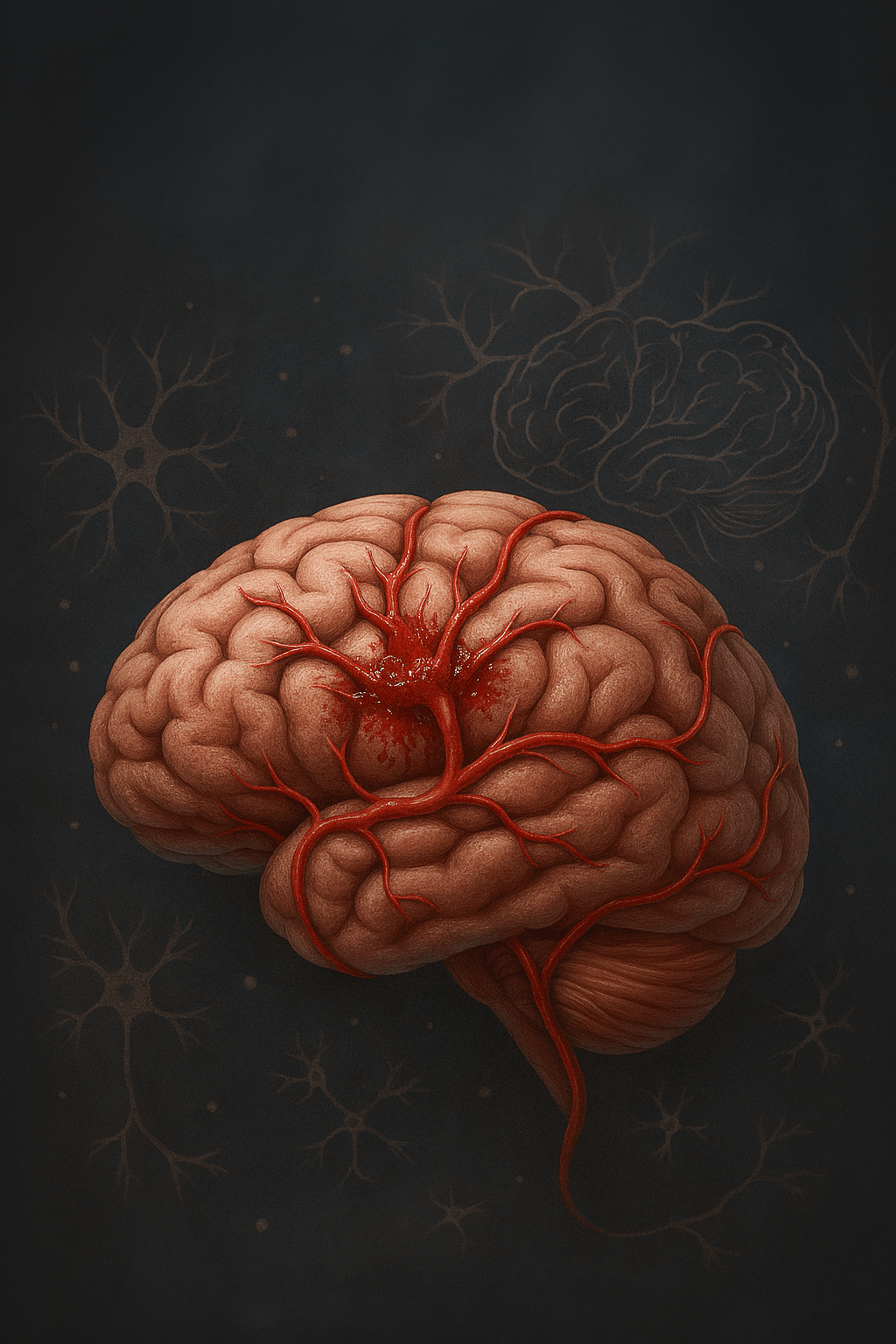
Yeah, yeah, the eye is cool! It focuses and organizes light, and is also responsible for dictating aspects of sight like color, intensity, and focus. But it’s now time for the real deal…we focused a lot on processing, but it’s about that time we SEE the fruits of our labor. From the photoreceptors, light goes to bipolar cells, which are interestingly in front of rods and cones, even though the photoreceptors are the ones that see the light. Bipolar cells are named as such because they have one dendrite and one axon, and they often correspond to one photoreceptor cell. The bipolar cell sends the signals to the Ganglion Cells, the direct link to the brain. The Ganglion Cells have axons to the optic nerve, which distributes the light-based information to the brain, into the visual cortex, which, if you remember from previous articles, is located within the occipital lobe(but does extend beyond). And now, we enter into the brain itself. Let’s rewind for a quick second. Before we enter the occipital lobe, it’s vital to realize that not all of the visual input goes to the occipital lobe. Some goes to the tectum, whose role is less pronounced in visual processing, so it is not vital for our purposes. Some goes from the optic nerve to the thalamus, which is, recall, the organizer in the brain; the thalamus contains the Lateral Geniculate Nucleus, the distributor of visual information. NOW, we can turn our attention to the Visual Cortex. Interestingly, the Visual Cortex has 4 layers, each which receives inputs from specialized neurons- the focus of which are substantially beyond our complexity. The first layer, V1, is responsible for the bulk of basic processing. Spatial orientation and an object’s motion are all detected by V1. V2, located next to V1, processes many tangible details of the object, such as color and shape. V3 is primarily related with perception relative to surroundings. Motion and depth in conjunction with orientation is relayed to our conscious awareness via V3. V4, which has some roots in the parietal lobe, relates to higher order visual processing, such as object and color recognition and discrimination. Lesions in V4(quite deep within the brain) would result in a decent visual representation, but lack of actual recognition(Harvard eDx).

Like most other functions of the brain, sight relies on contralateral processing. This implies that information we perceive in our right visual fields actually goes to our left occipital lobe. Additionally, to compensate for the contralateral need, our retinas in each eye consist of two halves- info coming from the right would go to the left side of the retina in each eye. While contralateral processing may seem inefficient, light attacks us from a straight, head on path, meaning that what we would see is an upside down and backwards representation of reality(White, 2015)
Comm Set, Activated
Buzzzzzz
Beach enthusiasts must be infatuated- all transmission related content in this article has been in the form of waves! Bad puns aside, it may be slightly confusing as to how the brain communicates and understands information via electrical signals but light possesses wave-particle behavior. Bearing this information, how is it our brains which are the mastermind behind sight? Never fear: The body always has a proposed solution. Until the retina, yes, it is true that there is no electrical propagation. Light has energy associated with it, but that energy isn’t really used for signaling in this context. From the cornea to the retina, it is just the natural movement of photons, and not necessarily propagation, which fuels the transmission. However, because the retina has direct access to the optic nerve, we start entering familiar territory: that is, we can apply the principles of electrical propagation. Incoming photons are absorbed by cells on the photoreceptors called photopigment cells. Remember the cones being responsive to three distinct wavelengths? It is photopigment cells which dictate the wavelengths of light which they respond to. They can either respond to Short(Violet-Blue), Medium(Green), or Long(Greenish-Yellowish) Wavelengths. The colors we see are a result of different cones being stimulated and a mixture of that stimulus, but I digress. Photons are capable of changing the shape of photopigments, activating a chemical cascade and the change in, here comes a familiar term, photoreceptor membrane potential(GPT, 2021). You know the drill. The change in membrane potential springs an electrical signal which passes down the retina to the optic nerve. The intensity of the signal is dependent on the brightness of the light, and the hue perceived is dependent on the intensity of activation of a certain cone/photopigment based on the emitted wavelength. In dark light, a signal is also emitted from photoreceptors, but this one releases inhibitory neurotransmitters to inhibit bipolar cells and prevent any signal from firing, as the rods can take over from here; cones are much less sensitive to light, meaning that a higher initial stimulus(brighter light) is required.
Hold on now- in that list of observable wavelengths I mentioned, you may have noticed- Reddish-Orange Tints aren’t mentioned. However, those colors which are associated with those cones doesn’t indicate that they are the only colors perceivable by those cones, but rather, those are the colors the cones are most sensitive to. They are still capable of perceiving many
Current Problems, Future Treatments
Ah yes. Vision issues. Let’s be real, we’ve all experienced them, whether temporary or permanent. And they’re not just annoying, they’re downright dangerous. There are several vision issues which plague us today, so let’s examine some prominent ones. Before examining specific issues, per se, it’d be prudent to analyze two of the most common symptoms: Near and Farsightedness, formally known as myopia and hyperopia. In myopia, the entered light is focused in front of the retina rather than on it, and can be caused by a lengthy eyeball or an overly curved cornea. Farsightedness is the result of light being focused behind the retina, occurring with a shortened eyeball or insufficient bend of the cornea/lens. Near and farsightedness are generally associated with all eye issues, and are the crux of what doctors look for in eyeglass or contact prescription. Concave eyeglasses, glasses which curve inward assist with nearsightedness, whereas concave glasses do the opposite(GPT, 2021). Another issue which many have is astigmatism, the irregular, widened shape of the cornea or lens. Rather than the light being focused on one distinct point, it is concentrated onto many points, leading to blurred vision. The issues themselves have been diagnosed since a while back, but it is the technologically advanced treatments which are worth discussing. One such treatment–no, not the one you’re expecting–is known as Photorefractive Keratectomy(Herz, 2023). In PRK, parts of the Cornea are actually shaved off; the cornea has a fixed curvature, meaning issues with it are likely to persist. Hence, correction would require surgical intervention. The outer layer of the cornea is removed and the layer under it is subsequently reshaped, while the outer layer naturally regenerates(Herz, 2023). Another method, LASIK, which has been on a popularity spike recently, possesses the same objective with a method of increased efficiency. A thin flap is created rather than a complete removal, and then the corneal tissue is reshaped, meaning that no regeneration is necessarily required: kinder to the body. There are many other advanced issues with eyes and impressive progression is consistently made in ophthalmology, but these are some of the most applicable ones in daily life
Wrapping It Up
Sight, light, and everything in between so bright. The seemingly simplest of mechanisms, unraveled by our curious and eager minds. Hopefully, you have gained some appreciation for the ever-important task, and understand some components behind common eye issues and their underlying conditions. Until next time, stay learning!



 NeuralAYM
Leave a comment