In every single article thus far, be it on simple neuroanatomy, complex cognitive functions, or spontaneous neural activity, there has always been some sort of mention on the electrical activity of the brain…and rightfully so. Our brains operate on electrical activity, sending signals, remaining sedentary, regulating gene expression, stabilizing connections, etc. Propagation through electrical activity is the quickest, most efficient way that the brain transmits signals to where they must go. It also ensures, for the most part, that incorrect, random firings don’t result in potentially harmful actions. The electrical gradient in the brain and its maintenance is likely the most crucial biological process to maintain basic functionality. In fact, a significant amount of our caloric intake goes into simply pumping ions in and out of the membrane. And don’t be fooled- this is no ‘waste of energy.’ This is a precisely regulated process which must always be active and accurate. Because if it’s not, the consequences would be nothing short of disastrous. Forget sporadic random movements, but our brains would literally…well, I’ll save that for the rest of the article

Yes, maintaining something simple, such as an electrical gradient of tiny ions, actually consumes much of our caloric expenditure. It’s fascinating how we don’t even feel it, but our bodies are still working to maximum capability. Help yourself to help your body…it’s taxing
Want Brain Games for Discount?? Keep your mind stimulated for life!
Live Wires
Refreshing The Current
We have indeed discussed the basics of the electrical gradient on the site, but it’s useful to provide ourselves with a brief refresher, and even expanding our horizons on topics we may not be extensively knowledgeable in, preparing ourselves for the heavier information. The neuron maintains stability at potential(the scientific term to describe an electrical gradient) -70 mV. This implies that the inside of the neuron- the components of the cell- is 70 millivolts more negative than the outside of a neuron; the ‘inside vs outside’ is defined by the cell membrane, composed of the phospholipid bilayer. But it is not the collective charge which is impressive, but rather the components which contribute to the charge. As was probably inferred, ionic currents combine to generate the observed negative potential. The two most crucial ions are Potassium, found inside of the cell, and Sodium, found on the outside. But, hold on. Potassium is positively charged. How is the inside substantially more negative than the outside? Well, although ionic movement and distribution is key to signal propagation, the resting membrane potential is actually more influenced by large, charged, proteins. These proteins are often negatively charged, influencing the resting membrane potential. Other ions, such as Calcium and Chloride, are also involved, but not as substantially as Sodium and Potassium. We won’t dive into the specifics of signal propagation and the action potential right now…that’s already been covered!! But the short version is, Potassium and Sodium are paid attention to so extensively because they are the ions most heavily involved in the signal transmission mechanism, both functioning to depolarize and hyperpolarize the membrane as needed.

Like I said, signal propagation has been covered in another article, and you can check it out right here(Electrical Properties of the Brain). For the purpose of this article, brush up on signal propagation using the link and remember that Sodium and Potassium are considered the crux of the electrical balance of the resting potential, their concentrations determining nervous activity.
Pump The Flow
Read the last sentence of the previous section. Now read the last couple of words. “As needed.” What does this mean? Well, in biology, one of the most important concepts is the concept of probability, at least from a passive perspective. Molecules will tend to flow to locations where they are more likely to flow to…in other words, where they are currently not. In neurology, we can refer to this as a gradient- an electrochemical gradient. The Sodium and the Potassium have a natural affinity to flow between membranes due to their high concentration on one side of the membrane but their low concentration of the other. Furthermore, the positively charged Sodium is heavily attracted to the negativity of the inside of the neuron. There’s a slight problem…dare too much of a Positive ion flows into the membrane to cause depolarization, and we all of a sudden have an action potential. The action potential is all or nothing. If it fires, it will reach its target, meaning we have a misfire. It could be minor, like a neck twitch; or it could be a painful kick delivered to a companion. In other words, it’s inefficient, and potentially dangerous. But, evolution being evolution, we have a pump. The Sodium-Potassium Pump, which you may be aware of from general biology. It relies on active transport, as it has to transport molecules across their gradient, so it cannot rely on the natural forces of biology. Let’s visualize it. Initially, ATP binds to the pump(the ion channel) and facilitates the exit of 3 Sodium Ions and the entry of 2 Potassium Ions, naturally creating a negative balance as both are positive. When ATP binds to the channel, it undergoes a change in shape which permits it to bind 2 Potassiums while simultaneously removing 3 Sodiums. The constant flow of the Pump is almost single handedly responsible for maintaining electrical balance, and because it requires energy, consumes a hefty portion of our daily caloric burn.

This image ought to attract a few of you guys, but did you know ion channels can be shaped like donuts…and many are. However, when a triggering factor such as ATP or some sort of enzyme binds to them, they are indeed capable of changing their shape to let some molecule(s) through. They are often very specific, only letting a certain molecule or class of molecules through
Minis and Big Pots
We are almost ready to examine the adverse effects of electrical fluctuations and imbalances, but first, it would be interesting and well suited to become acquainted with a relatively harmful effect of electrical fluctuation- minis. Minis are miniature(shocker) ‘blips’ in the electrical potential of a network, first observed with Acetylcholine and Motor Neurons. Do NOT confuse minis with action potentials; as aforementioned, Action Potentials are all or nothing. If the threshold is reached, they will fire? So what are minis? Action Potentials cut in half? Suppressed action potentials? Well, not necessarily. Contrary to initial belief, Minis do not prompt some sort of action to lesser extent, because they don’t reach the action potential threshold. However, if Calcium(the ion which binds neurotransmitter vesicles) just manages to sneak past the gradient and elevate the potential to -60-65 millivolts(or anything around the sort) was reached, just slightly higher than the resting potential, than neurotransmitter vesicles may be released from the Presynaptic Neuron and bind to the Postsynaptic Neuron or Interneuron and trigger an electrical cascade, but A SHORT LIVED cascade which often dies out before it travels along multiple neurons. In some cases, Calcium does not even need to enter the neuron…the vesicle follows its own gradient and randomly escapes the cell, but a large enough number of vesicles would never leave, under standard conditions, to generate an action potential. So, from our repeated mention of how randomized electrical activity is inevitable and can be treated as a simple byproduct of nature, this is a good place to bid farewell, right? Well, what happens when these electrical fluctuations actually generate action potentials? Or if the pump ceases to function? Or if ions are permitted free entry at all times? It’d be like touching a live wire…
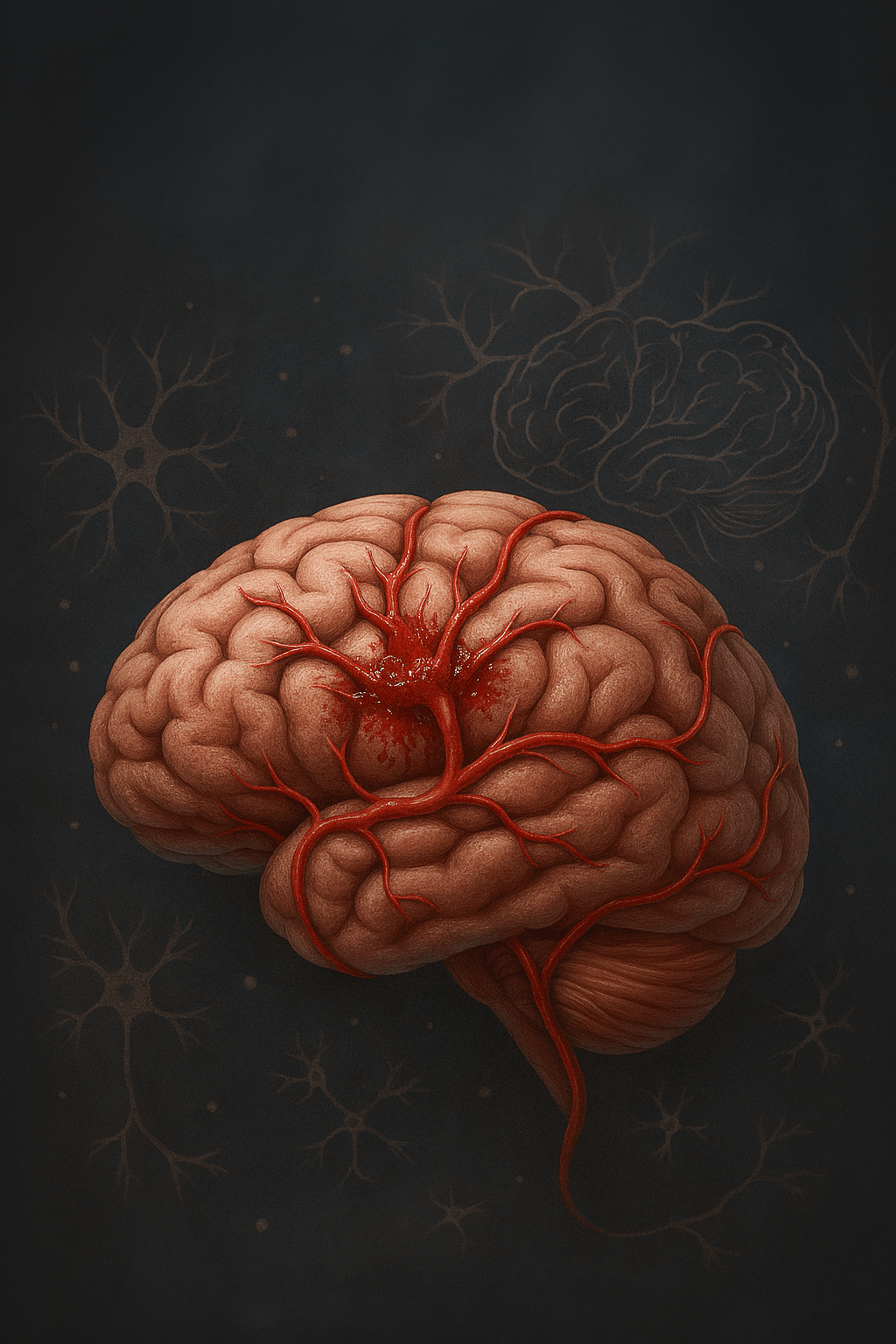
Many of the current neurodegenerative diseases actually have electrical imbalances in the brain as one of their causes. If electrical homeostasis is not adequately maintained, not only will it lead to dangerous, involuntary actions in some cases, but it will also promote neuronal death and the degradation of several networks
Current Sparked Out
Volt Even Happened
This is a good question, because it raises more subsequent questions than answers. Did electrical malfunctioning cause the ensuing effects, or did inadequate neuronal maintenance lead to random electrical malfunctioning? While various conditions are associated with electrical imbalances, it’s best if we manage to grasp a general understanding so we can apply the knowledge to our desired scenario. Most electrical imbalances and malfunctions are characterized by excessive excitability…in other words, as implied, the neuron is more likely to become triggered. Several causes can lead to an increase in excitability, such as ion channel dysfunction(becomes excessively permissible or its shape is deformed), excessive presence of excitatory neurotransmitter, pathological proteins, and such. It can, at times, be genetic, as in the case of seizures. Most likely, a random sodium influx will occur, triggering an action potential in the neuron…meaning that it WILL cause a signaling cascade. The high concentration of Sodium inside of the cell OR the decreased threshold of the cell generates a powerful enough signal to cause substantial release of Neurotransmitter Vesicle Packages; enough packages to produce the same effect in the ensuing neurons. As if the phenomenon wasn’t terrifying in and of itself, ionic and electrical fluctuation is considered to work in a positive feedback loop. The positive feedback mechanism suggests that with more occurence of the specific event, the more likely it is to occur in the future. In this specific case, the body probably incorrectly realizes the frequency at which action potentials are occurring and lowers the threshold for these action potentials to generate. Remember, not all action potentials are tangible. Some do correspond to actions like eating and reading, but others trigger biological processes in the body…processes for which poor regulation may not only be devastating, but life-threatening.
Power Off
The entirety of the article has been a buildup to one of the most applicable sections ever written- how do electrical imbalances affect neurodegenerative diseases. Neurodegenerative diseases are conditions which deteriorate the nervous system, often through continuous cell death; the problem with cell death in the nervous system is that it can collapse a whole network. Furthermore, we don’t necessarily have cures for them because the pathological component can attack in a variety of areas in the brain. But perhaps we can examine some common electrical imbalances and derive potential plans on how to attack! The most prominent electrical issue is seizures, epilepsy, and conditions of the sort. Seizures occur when a part of the brain(any) has an abnormal electrical outburst…in other words, the textbook definition of excessive excitability. The current mechanism in place, a Vagus Stimulator, works in an interesting fashion. Doctors weren’t looking to inhibit signals, but to rather modulate them. The Vagus Stimulator sends mild, incremental signals to the vagus nerve and transmits the signal to the brain. Presumably, it’s not large enough to generate an entire action potential, but it likely is large enough to keep systems and networks synchronized. Adding more inhibitory neurotransmitters could result in unnatural states of depression, which is psychologically dangerous, so that’s out of the question. Electrical inhibitors could stop circuit function, so seizures are a tough one. Another one I want to zero in on is Alzheimer’s, a personal topic of interest for me as of late. Protein aggregates in Alzheimer’s actually have the capacity to form ion channels of their own on neural membranes…yes, they have that capability. They promote Calcium Influx in the cell and due to a disruption in homeostasis and presumably irregular firing, cell death is triggered, as it would further harm the body to maintain such a defunct cell. My postulate was that we could destabilize the hydrophobic interactions on the surface of the protein-turned-channel, as in Alzheimer’s it is thought to be misfolded, so in the place of strong hydrophilic interactions, we end up with weakened yet toxic(and surprisingly stable in aggregate) hydrophobic interactions. Speculating on some of these diseases and conditions is not only fascinating, but necessary, and I encourage those with an interest to follow suit.

Beta-Amyloid, a substance we’ve covered before, is the protein which aggregates and forms plaques within the brain in Alzheimer’s Disease. A normally soluble protein, it can sometimes misfold, exposing hydrophobic regions and causing ensuing insolubility. One of its toxicity mechanisms is forming ion channels on unsuspecting membranes, disrupting electrical balances.
Wrapping It Up

Electrical balances and ionic security protocols are like the lock to our brains, which are quite hard to pick on and break. However, if they do snooze on the job, the results can be catastrophic. Scientists are working their hardest to attempt to minimize the risk of electrical fluctuations being a cause of a disastrous occurrence, but it is also up to us to remain aware of how we can improve our future. Starting here.




 NeuralAYM
Leave a comment