By now, whether or not you’re well versed in neurology, it’s no secret that the brain is involved in, well, just about every single process. While gaining an understanding of how it is indirectly responsible for several biological processes, most have an intrinsic understanding that a complex network of wires dictate our skillsets and higher order functioning. We have devoted extensive thoughts to the mechanisms of this complex discussing how we, as beholders of the intricate system, can maximize its potential. Additionally, some futuristic implications and past fables have emerged on the site, contextualizing the strides we have taken and will continue to take. However, an area that we have not provided much love to is the structural integrity of our brains. More specifically, how this network maintains itself. How do axons even grow in order for us to develop new skill? And if the body really doesn’t waste resources, why doesn’t it die the instant we cease to enact a certain neurobiological pattern? All are valid questions, with some fascinating answers
Before you read, check out the trending brain stimulators, still on New Year’s Sale-Brain Games!!
For context, axons are the structure of a neuron responsible for transmitting signals, so it’s no surprise that how efficacious we are at a certain practice is largely dictated by the development of an axonal pathway. The only question is, how does the axon know where it’s going? Moreso, where does the axon even come from? It doesn’t simply spawn…
Want Brain Games for Discount?? Keep your mind stimulated for life!
RoadRunner
Synergy
If you’ve delved into neurology and neuroscience before, I’d assume that the synapse is a structure you’re relatively familiar with. However, it is rather unbeknownst to many who have not studied the topic, and it has also not been particularly covered on this site, making it prudent to debrief ourselves on. The synapse is not necessarily a physical structure, but rather a tangible space between the Pre-Synaptic and Post-Synaptic Neuron. Recall how, on their surface, neurons have receptors which respond to certain neurotransmitters in order to propagate a signal throughout the cell and through the network. Well, the synapse(or synaptic cleft) is the space between this abode of receptors and the axon terminal, the scientific term for the end of the axon on the Pre-Synaptic neuron. Remember, Pre-Synaptic implies that that neuron was responsible for transmitting the signal to the Post-Synaptic(receiving) neuron. The stronger the synaptic transmission between a specific synapse or series of synapses, the better that someone would be able to perform an action(physical) or execute a cognitive function(mental). Now, it does seem slightly counterproductive to have spaces in between these connections and neural networks, as direct transmission would seem to be the most effective, right? Well, that would rely solely on electrical conductance, which would become feeble after a distance due to natural transmembrane ion flow. Converting electrical signals into chemical signals is crucial to ensure the signal stays along its path and produces a strong enough output in order for a function to be executed, be it a physical exertion or a mental string of critical thinking.
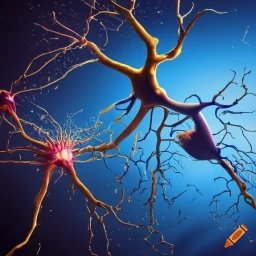
Notice the lumps within the picture, which stand out from the thin projections. While there is inadequate zoom in this depiction, there are no actual connections between the projections and the lumps- but rather minute gaps where neurotransmitter is released and signals are propagated.
Speaking of Fast Signal Propagation, this new supplement(Joe Rogan endorsed) is doing wonders for ages 25-65: AlphaBrain
History
Where and why axonal projection occurs is actually a fairly recent issue, unlike several others which have roots in ancient civilizations. The extremely intricate neurobiological workings of the nervous system are far from fully understood, constantly studied in the world’s most prestigious scientific facilities. We are fast forwarding substantially past the point of the ‘Neuron Doctrine,’ the idea that the nervous system is comprised of individual cells. In the mid 20th century, Bernard Katz and several colleagues discovered many functions of the axon, proposing that many cellular components utilize the axon as a medium of transport. The rapid technological development in the scientific industry, however, led to a more detailed inspection. In the 90s, several molecules which actually guide the growth of axons and where they project to were identified, leading to an understanding of the underlying mechanisms behind the fascinating idea that axons somehow know where to go. Of course, with new technologies, we are now capable of depicting their exact mechanisms. However, before we get too far ahead of ourselves, we must first understand what these molecules actually are.
Just Keep Gro-Ing
Now, here’s a new one!! We’ve never introduced nor alluded to growth factors on this site, but there’s a first time for everything, isn’t there? Growth factors are substances which mediate the growth or development of tissue within the body, and there is no exception in the matter of axonal development. Interestingly, there are attractive and repulsive cues; repulsive cues mediate axon growth away from the actual signal. At the end of axons are growth cones, cones which have the inbuilt capability to recognize the materials present in the surroundings. But, what do the growth cones exactly recognize? One such molecule is N-CAM, neuronal cell adhesion molecules which adhere to the growth cones; another adhesion molecule, Cadherins, is Calcium Dependent, indicating its adhesion to the surface of the axon is modulated by Calcium. Modulators can also function in indirect ways, as in the case of Integrins, proteins which play a role in adhesion between cell surfaces and the extracellular environment. Adhesion with components in the ECE also contain guidance cues which direct the axon. Several miscellaneous molecules should hardly go unnoticed: Receptor Tyrosine Kinases on formulating axons are one of the molecules which renders the axon capable of recognizing growth factors; netrins, secreted proteins, have attractive or repulsive effects based on the receptor they bind to; semaphorins, also proteins, function mainly as repulsive factors, steering axonal growth in a certain direction(UT Health, 2020). I’m sure you get the gist: several molecules, predominantly proteins(presumably due to their charged nature), serve to properly guide the axon to its target. All this talk about a target…what is the target??
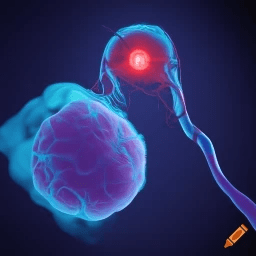
No, this is not live footage. However, this is a sufficient visual. Imagine the red dot as a repellent…perhaps it carries the same charge as a growth cone. The growth cone will then be incentivized to proceed in an opposite direction, facilitating the steering towards its correct location
I’ll Find My Way
Destination Arrived
Now for the big question, the most intriguing question in our endeavors. How does the axon actually select a target? We know of the guidance factors that it utilizes in order to reach the target, but what is the target? It can’t be random…otherwise certain skill sets would not develop if axons were not at their targets and fostering connections with them. To understand this, we must define the term topographic, a term which essentially implies that the environment the material is in largely dictates its distribution. For neuronal organization, neurons are conveniently more inclined to project to other neurons in close proximity. While axonal recognition is one of the more unexplored concepts in neurology(as we mentioned), the idea of labeling seems to explain the theory. Roger Sperry developed the ChemoAffinity Hypothesis, which stated that chemical components of receptors aligned with chemical components of the axon growth cone, allowing the axon to acquire a positional goal(UT Health, 2020). This also relates to the process of Neurogenesis, the ability of the brain to form new neurons, and how these new neurons are able to reach specific targets in order to facilitate the correct process. While many of the guidance cues are similar, there are subtle differences which guide specific neurons- much like genes. While gene sequences are similar, they are not identical. It is these subtle differences in guidance cues which follow the same principles but operate under different conditions and with different components which allow for differentiation and targeting.

I want you to actually analyze this brick wall. Look at the deterioration on each brick- it must be maintained in order to cease from eventually collapsing. Similarly, EVERY neural connection in the body must be maintained…so the body doesn’t want to hear any inefficient excuses. But what determines efficiency within the body? How is it constructed so that only what is necessary is upkept
Axonal and Synaptic Death
The body will never waste a resource. Golden Rule 1B. If a synapse is not adequately stimulated or utilized, the body will not devote resources to its maintenance. Much like growth and facilitation, death and elimination is precisely regulated. Let’s utilize the neuromuscular junction as an example. Synapses are eliminated by the reduction of Acetylcholine Receptors on the Post Synaptic component; the more active synapses tend to attract more trophic(growth based) factors and hence are maintained with increasing efficiency. Also very interesting is the fact that, in the junction, only one motor neuron is generally needed for a particular muscle. We begin with multiple coordinating to one muscle, but the more competitively active nerve terminal is favored, hence causing its development and rendering it exponentially stronger than the others. Much of it boils down to the competition for NGF, Nerve Growth Factor. Axons which have a future have successfully outcompeted their counterparts for NGF and transport it downstream to provide nutrients to the cell body and ensure their survival. While we were aware that the more used an axon is, the stronger it will be, the exact mechanism behind it had scarcely been studied by us…but is essential for our understanding of the laws of the nervous system.
Don’t Discount Psychological Death. Get new potential treatments for PTSD, revolutionary technologies: The Best of VR
Wrapping It Up
We’ve harped about the brain’s fascinating mechanisms from Day 1 of the site, but this is one of the first times that we’ve delved into the intricate neurobiology behind its mechanisms. While it is arbitrary, to say the least, it is laying the groundwork for the next generation of neuroscience- the complex, yet majestical, workings of the brain in relation to the body



 NeuralAYM
Leave a comment