I’m sure if we could, we would all walk around life with a magical button that allows us to control the pain we felt, turning it down whenever the sensation got a little too painful. But, what if there was a way to turn these pain levels down? Is there a way that we can literally control the amount of pain we feel, applicable to absolutely any situation. We’ve examined the idea that we, thanks to the capabilities of our brain, are more powerful than we could possibly ever imagine. But how exactly do we put those ideas into practice? More specifically, in this context, what are the precise mechanisms by which we can, as everyone says, ‘dial down the hurt?’

What’s pictured? A circuit board. How is that relevant to understanding pain control though? Well, by the end of the article, if we wish to become masters at understanding cognitive control of our biological systems, it’s essential to remember that the brain functions like a circuit.
Pain, Pain, Go Away
Healthy Doses of Hurt
So, naturally, in order to understand how we can control our own pain, we have to outline how pain itself is even perceived; naturally, the brain is involved, but what and where is the onset of the process. So, the perception of pain begins with stimulus in the form of tissue damage, which is detected by specialized receptors known as nociceptors. In areas highly susceptible to pain, nociceptors are present in much higher concentrations, an extension of the idea that the body does everything for survival: where stimulus detection is needed, stimulus detection will be. Now, harmful stimulus can come in many forms, but the one constant is tissue damage. Excessive physical tension, exposure to adverse temperatures, and various other instances can cause tissue damage. Akin to the other somatosensory processes, the signal travels up the spinal cord, dependent on where it originated from, and is then processed in the brain. Depending on the intensity of the pain and the presence of other stimuli, the pain can be modulated and amplified or degraded in the spinal cord…and, the crux of our discussion lies in the fact that the brain can send signals back down the spinal cord in order to further regulate the pain

When it comes to our senses, it’s hard to envision them as being something other than our brains processing external stimuli and delivering that stimuli in a manner that we can process. But, like many mysteries in the biological world, we’ll soon discover that the realm of senses is encapsulated with much more
Reverse Psychology
The end of the background section left us on a bit of a cliffhanger- for, how can the brain itself modulate the extent to which this signaling is perceived? Well, a process of this sort is observed frequently in the brain, such as cortical neurons in the visual system sending projections back to the superior colliculi to control eye movement. But, the title implies that we have conscious control over the pain we feel, but isn’t control of our sensory input via cognitive action unconscious? Intuitively, sure, but consciousness does not necessarily indicate awareness of the process itself…it more so alludes to the fact that we have control over it, and understanding how we modulate sensory input, which seems unconscious, will better assist us in our main topic. So, consider the visual system, where, of course, we initially ‘see’ the projection of the material world around us. However, we are most often selective about what we choose to observe…so, despite everything being present in our visual field, how and why are we often hyper focused on one entity? It all comes down to cognition and choice. If we so choose to focus upon one particular aspect of the visual field, regardless of orientation, it will be ‘seen’ more. When visual projections are initially sent to the cortex, the cortical activity will be analyzed and whichever component of the field has more associated cortical devotion, or attention, will receive positive feedback in the loop, and other objects will be inhibited, or seen ‘less’ than the others.

The difference is, it’s intuitive that we possess some control over what we choose to focus on in terms of sight, with our head movement. Cortical feedback serves, mostly, as a supplement. However, in pain control, where there is no tangible mechanism, what truly occurs?
Neural Overlaps
Although the mechanism by which we control cortical feedback in the Visual System is rather clear, we often find that in biological contexts, intrinsic methods by which we physiologically act often remain rather similar. Bear with the gatekeeping for just a moment, but one particular property of the brain is its operation via feedback loops. After initial stimulus, it is feedback which serves to modulate the stimulus intensity, either enhancing it or inhibiting it based on further activation rates of the specific area of interest. While they operate in many different manners, the principles are quite constant. Consider something as automatic as movement…which you may THINK you fully control, but actually is under the jurisdiction of many automatic feedback mechanisms. Let’s imagine ourselves performing a very simple act: walking. Neurons in the motor cortex have a dedicated firing pattern for walking, but all of a sudden, you trip!! No problem…the cerebellum reads the input, recognizes that the firing pattern is flawed, and will adjust action for you. It’s as if there is a built in AI within you, analyzing data and correcting it, without any cognitive effort on your part. Imagine if we could control these feedback loops!! Wait. We can.
The Ultimate Secret
Magician’s Tricks
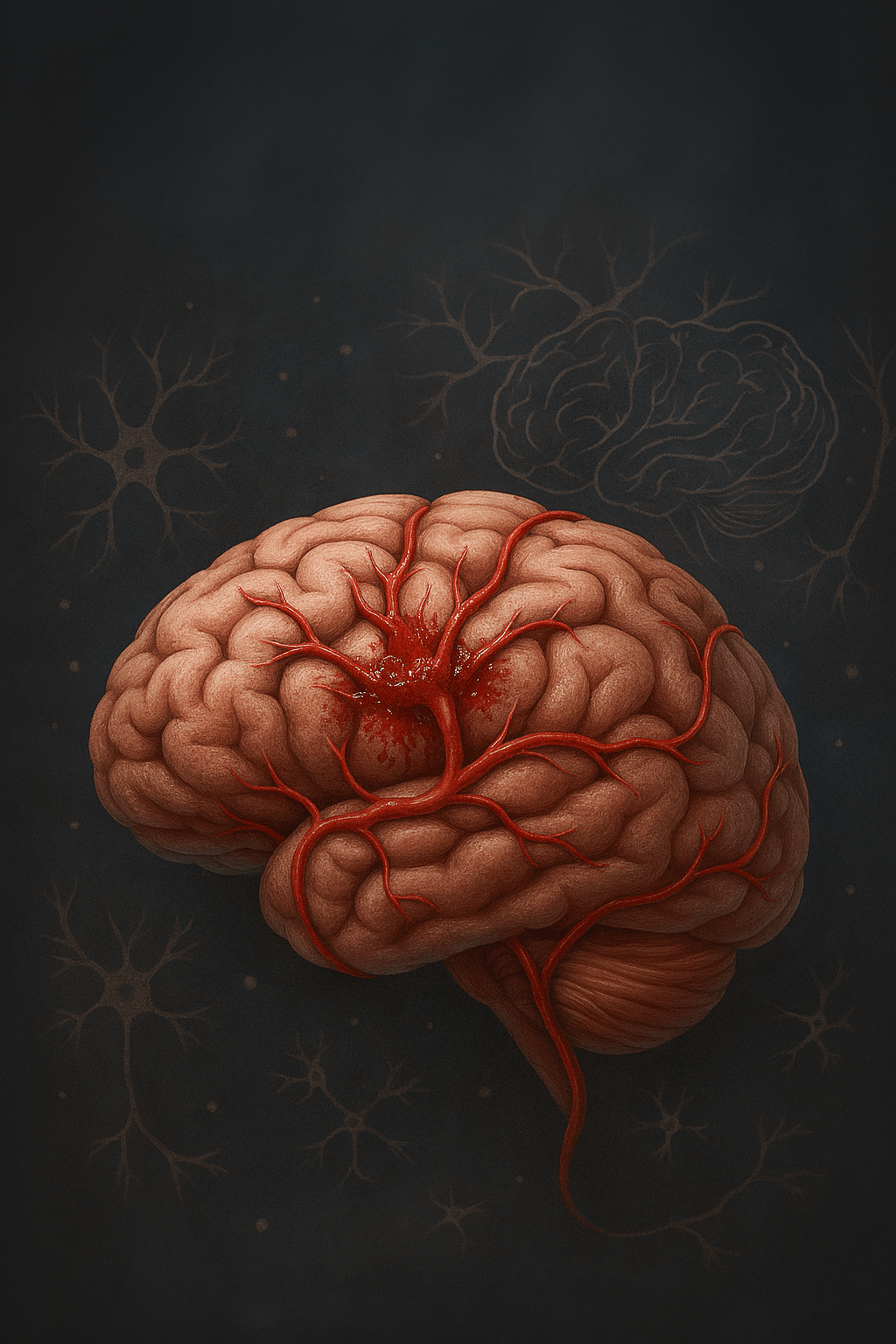
I’m sure you’re pretty thankful for the brain being able to manually control feedback loops such as motor control, heart rate, etc., but some feedback loops can ACTUALLY be controlled by us…including that of pain. See, when we first experience pain, there’s obviously a sensory component to it, and we can’t control that intensity. That’s purely physical. But, there’s also an emotional component to it, and this is where a structure known as the Anterior Cingulate Cortex comes into play, which serves as a bridge between emotion and our modulation of emotion, or cognition. When a set of amygdaloid (emotional) neurons are appropriately activated in response to pain, our ACC processes this firing and accordingly alerts us in a cognitive manner, allowing us to make decisions and respond. From a cognitive standpoint, if we were to simply focus on how unpleasant the pain feels, the cortex would send feedback back to the ventral ACC, which relays it to the amygdala, and heightens the emotional response. But, where does the pain come into play? That keyword, ventral, is precious. The Ventral ACC inhibits a midbrain structure known as the Periaqueductal Gray, a midbrain structure crucial for pain modulation. Inhibition of the PAG will maintain the painful signaling, but activation of the PAG will suppress painful stimulus, and it’s this mechanism that proves vital to pain control
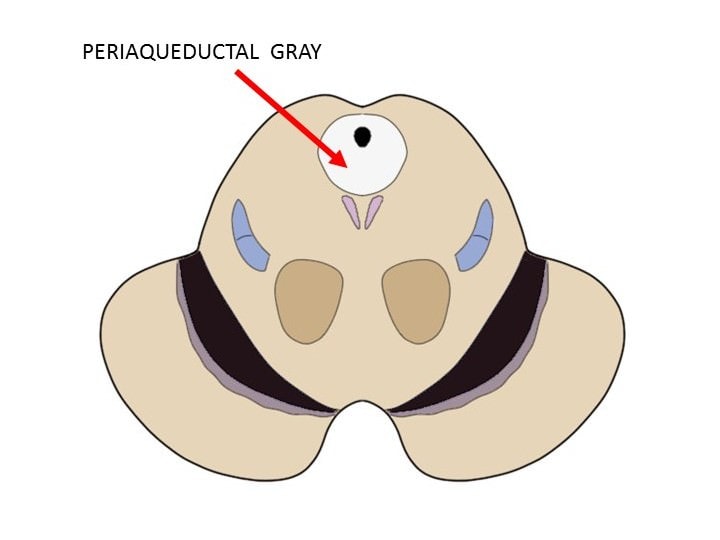
This whole structure you see isn’t the PAG by itself. The little white circle is responsible for pain modulation and much, much more, highlighting the capacity of our neural circuits
Mastery
Is it hard to understand? Don’t worry. It was hard for us too. But, the key to understanding lies in the lens you look at the brain from; far too many conceptualize the brain as a collection of different structures, each with separate tasks. And, technically, that’s true…it’s the versatility of tasks which allow our processing center to be so advanced. But, we should begin viewing as a true circuit, each part dependent on the others. Consider the aforementioned Periaqueductal Gray, a structure which, at first glance, would seem largely out of our control, considering it modulates pain through molecular signaling. What we fail to consider is that the role of these modulators is almost always quite (if not entirely) dictated by cognitive processes and input, their activation being constantly regulated by us. It seems like an abstract idea, but this is where the idea of the circuit comes into play. Consider the pain modulation circuit, where the heavily Cognitive ACC, depending on our response, either sends a signal through a cortical or amygdaloid synapse, exciting or inhibiting the PAG, respectively. Yes, while the PAG’s molecular release is independent of any structures, the facilitation and the onset of the pain control is cognitive, similar to many other circuits, and allows us to do what once seemed unimaginable: take control.
Wrapping It Up
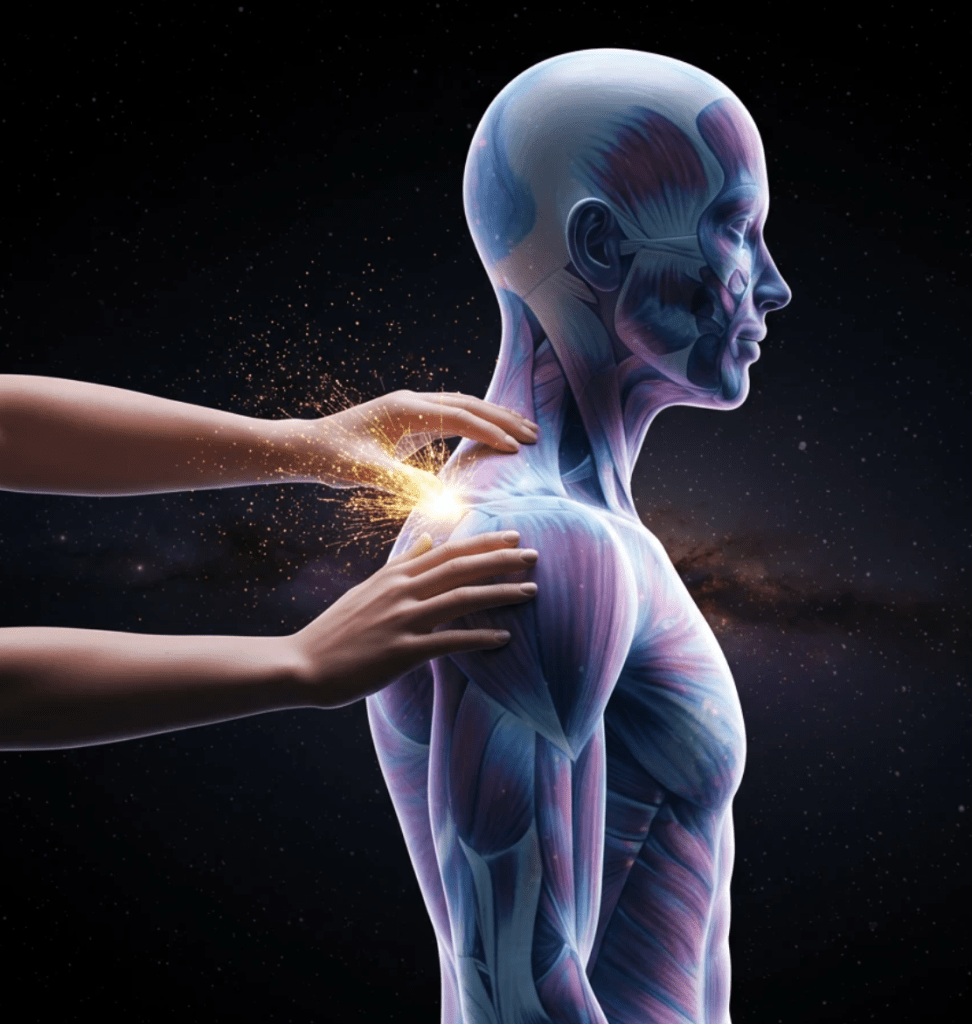
It’s a secret…not many people actually have the knowledge of how to use their thoughts/cognition to manipulate their physiological states. In a world where emotions are so controlling, learn to use your own mind for the better!!



 neuralaym
Leave a comment