One of the most miraculous aspects of our brains that psychology and neurology alike have been attempting to explain since the beginning of their studies is how complex our neural network can be. Stimuli which seems unrelated to a certain emotion, aspect of life, or entity, can evoke heavy recollection or feelings associated with it- a notable example being PTSD, and how the slightest triggers can result in intense responses. In other words, how is the brain able to associate varying components in our environment to create not only a current image, but also an image which relates to the past and recalls upon our learning. In other words, we know what structures are responsible for manifesting our perception of the environment, but what is the glue that combines everything?
BRAIN Games for cheap here- keep your mind stimulated!!- Brain Games

I alluded to the structure we are about to study as a glue, but why would I do that? Glue is crucial for structural integrity, maintaining the composition of an object and ensuring it does not collapse upon itself. What structure could be so vital that the brain relies on it as, essentially, its glue?
Context Matters
Composition Book
There are a LOT of complex aspects in our environments which our brains must analyze, relate, recall, and then formulate new experiences upon. But association can become confusing to discuss if we do not outline what exactly is being associated. Oftentimes, we may treat a specific component as one singular entity rather than multiple pieces to a puzzle. First of all, let’s imagine we were the most basic organisms on Earth, and were only able to perceive what was happening at an instantaneous point in time. We would, at the very least, have our senses(I’d hope). Sensory OBSERVATION, not APPLICATION, is one of the fundamental principles of human existence and survival. The ability to simply register our environment. Let’s now add a layer, still existing within the realm of the physical. We now have the ability to adjust our positioning and movement/motor functions based on tells from the environment. We don’t know YET what is ‘good/bad,’ but we can determine where a sound is coming from, when in time did different stimuli befall us, etc. Now, pretend our brains are growing, and we can recognize things. For this to occur, we would need some basis of memory; assume that we have the intrinsic capability to recall the substance of an object and its essential components. Let’s take it a step further- reaction. NOT reflexive reaction. Reaction based on experience and emotion, improving versus degrading our status, involving higher order critical thinking and decision making based on the specific encounter with the stimuli AND our past experiences. Through these four components, we’ve simplified the realms of human existence.

This image strike a chord? It definitely does with your reflexes. Putting your hand on top of a flame will result in the body’s automatic want to remove it(whether or not you actually do it is your predetermined choice!!). The reason that reflexive action wasn’t added as an advanced component was because reflexes have been evolutionarily built in to our genetics, and we have an affinity to perform reflexive actions from birth
Adapt and Survive
Those four components of life alone are presumably difficult for our brains to digest in response to every stimuli, at every moment. Now, imagine having to comprise a coherent image utilizing the capabilities of the individual structures in our minds, having to tailor to our biological predispositions as well as our conscious awareness, factoring in consequences, results, reactions from OTHERS…the whole 9 yards. But, the thing is, don’t neural networks take care of that? Why do we need an actual area? Doesn’t that just waste space. Extremely valid question which demonstrates understanding, but in this case, there is no wasted space. Every stimulus perception begins with sensory recognition and processing- that’s just the speed of our intrinsic biology. However, as we mentioned, there are several cognitive aspects such as emotional response, recall of past experiences, etc…you could probably continue the list. Every experience, every memory, every emotion is encoded with a specific neural pattern, yes. Energetical efficiency. Imagine if every single experience with a hint of similarity was all coded with solely a neural pattern rather than a pattern interconnected but selectively regulated activated by association areas. Whenever a slight stimulus occurs, electrochemical propagation would have a chance to activate the entirety of those patterns; with association areas, however, the intensity and specificity of the stimulus allows us to regulate what is recalled by our brains, rather than the stimulus itself.
AlphaBrain Supplement to Keep Mind Optimized- Supplement

Imagine, on the sight of a dog, you feel happiness, warmth, remember all of your hugs…and then you remember the time you saw your other dog get eaten by a crocodile, or the time a dog bit you, or the time a dog chased you…yeah. Association areas prevent all of that from happening. It comprehends your biological/conscious perception of the surroundings and activates the correct neural pattern(s). For example, if someone was scared of dogs, they wouldn’t have to put effort into recollecting the memory of a dog chasing them…association areas between your amygdala(emotion) and hippocampus(memory) would activate the correct network
Exploring Associations
Let’s not dissociate ourselves with the past too quickly now- it’s important to reminisce upon and analyze the steps which brought us to an advanced understanding in the first place. Now, the concept of some magical term for higher order processing was not even an afterthought in the 19th century. Neurologist John Hughlings Jackson theorized that the brain was organized hierarchically- meaning that its precise vertical placement of structures had a significance, and so did the horizontal placement(UTH, 2020). It was discovered he was correct- vertical organization regulates transmission efficacy, and horizontal organization disperses the structures into niches. The integration between these organizations were then formally referred to as association areas, hence why we factually know their involvement in higher order processing. Then, work done by neurologists for structural determination also suggested a specialized structure for critical coherence. This may sound familiar, but Paul Broca, upon damaging what is now known as Broca’s area, discovered that individuals suffered from language deficits(GPT, 2022). But, language articulation is motor…how can anything not directly related to the motor cortex affect it. Well, it is motor, but understanding the fluency and sensibility of your speech is cognitive. While Broca’s Area is merely one example, similar trial and error work done by neurologists has facilitated the discovery of many other types of association areas. But when it comes to higher order processing, how do these areas get in the mix?
Associating The Dots
Systems A-Go
Now, this one, you may have indeed been able to answer or at least infer the basic mechanism to without much help. What activates the association areas? What allows them to perform their function? They don’t just happen to turn on…well, what activates every single entity in the brain? Neural connections. We’ve outlined the difference in neural connections and association areas, but it is the electrical propagation which leads to their activation. When association areas are activated, either through ion channel depolarization or GPR mediated activation(for purposes longer in duration), then higher order functioning can take place. And the reason for this is the bipolar nature of the association area; while bipolar cell in a sense of the nervous system generally relates to a neuron or ganglion cell with one dendrite and one axon, let’s refer to bipolar in this case as being able to send and receive signals. This nature of the association area greatly contributes to its functionality; it allows the same electrical signal to be sent to the corresponding neural networks without the death of signal propagation, the need for an energetically inefficient network(infinite amount of networks for simply one related memory), and the ability to relate ALL aforementioned aspects of processing in life to a particular situation.
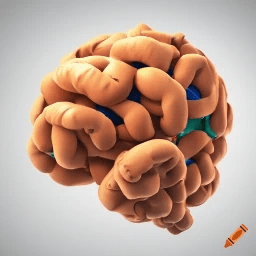
You may have noticed an unfamiliar term in that paragraph…what is a GPCR. A G-Protein Coupled Receptor is simply another mechanism of signaling, but is not as quick…but is VERY sustainable. It essentially, rather than direct one way signaling, triggers a chain reaction of secondary mechanisms to amplify a given signal and then transmit it to the desired area, making them prudent for processes such as gene expression(or, sometimes, association)
Future Research
Although it’s technically a structural component to the brain and we know quite a hefty amount of knowledge on the basic structure of the brain, the sheer scope of the association areas makes it an area of consistent, evolving research. Most prominently, with the development of novel neuroimaging techniques, we can discern which precise areas of the brain that association areas project to, allowing us to develop a live cognitive map of the corresponding areas of the brain. Furthermore, while we understand that these areas utilize different signaling mechanisms, the patterns which the specific areas correspond to would render us capable of verifying what specific signaling mechanisms each area utilizes. With this knowledge, we can generalize and formulate trends of what sort of functionalities employ what sort of signaling mechanism. Pathological research would also be greatly assisted. Alzheimer’s Disease, for example, is associated with various signaling defects, especially in the hippocampus. If we are able to figure out what sort of signaling mechanisms these areas of the brain operate on, we can potentially remedy them with certain treatments(which we will most definitely delve into!!)
Wrapping It Up
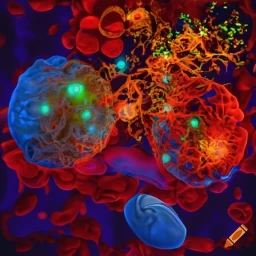
Association areas may very well be the most underrated part of the brain, because they don’t have a specialized function. However, it is the association areas which permit all of these areas to perform their specialized functions, in a perfect harmonization to optimize our life. While they may be neglected our school, they’re not neglected by biology





Leave a Reply